
10 Little Known Facts About Monopoly
Th3
Love it or loathe it, Monopoly is the board game that refuses to retire. It has ended friendships, started family feuds, and turned otherwise calm people into ruthless landlords in top hats. But behind all the yelling over Boardwalk and the arguments about Free Parking, Monopoly has a strange, twisty history that’s way more interesting than you’d expect.
In this deep dive, we’ll explore 10 little known facts about Monopoly that go far beyond the rulebook. From a feminist inventor who barely got credit, to a 70-day marathon game, to a rule you’ve probably broken your entire life, these Monopoly facts will completely change how you see that innocent-looking box in your closet.
1. Monopoly Started as an Anti-Monopoly Protest Game
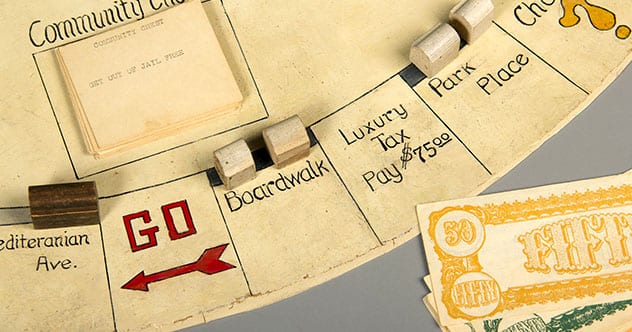
Despite its reputation as a celebration of ruthless capitalism, Monopoly actually began as a warning against it. The roots of the game go back to the early 1900s, when a woman named Lizzie Magie, a stenographer and self-taught game designer, created a board game called The Landlord’s Game. Her goal wasn’t cozy family fun. It was economics classwith teeth.
Magie was a follower of economist Henry George, who argued for a “single tax” on land to reduce inequality. Her game was designed to show how land monopolies could make a few people rich while everyone else slowly went broke. The board featured looping streets, spaces for properties, taxes, and a wage for passing the starting pointideas that should feel very familiar to any Monopoly player.
Ironically, the game that was supposed to criticize monopolies eventually became the world’s most famous one. Somewhere, Lizzie is probably shaking her head.
2. The “Inventor” of Monopoly Didn’t Actually Invent It
If you’ve ever glanced at an old Monopoly box, you might have seen the name Charles Darrow proudly credited as the game’s inventor. The traditional story says Darrow was an unemployed salesman during the Great Depression who cooked up Monopoly at his kitchen table and sold it to Parker Brothers. It’s a nice bootstrappy legendbut it’s only part of the story.
In reality, Darrow learned a version of the game that had evolved from Lizzie Magie’s Landlord’s Game, which had been circulating in various homemade and modified forms for years. Darrow refined the design, gave it polished artwork, and presented it as his own creation. When Parker Brothers investigated the game’s origins during later legal battles, they discovered Magie’s prior patent and ultimately bought it from herfor just a few hundred dollars.
Darrow, on the other hand, went on to become the first board game millionaire. If Monopoly teaches you anything, it’s that timing, branding, and a good story can be just as powerful as innovation.
3. There’s a Spelling Mistake on the Board That Lasted for Decades
One of the game’s most charming (and slightly embarrassing) secrets is that one of the yellow properties is spelled wrong. On the classic board, you’ll see “Marvin Gardens”. The real neighborhood in Atlantic City, New Jersey, is actually called Marven Gardens, named after the nearby streets Margate and Ventnor.
This typo wasn’t just a random accident. The misspelling appears to have been copied from an earlier homemade version of the game, which Darrow used as a model. When he turned the game into a commercial product, the error made the jump too. For decades, players around the world unknowingly learned the wrong name for a very real place.
The mistake has become so iconic that it’s now part of Monopoly lore. In a strange twist, the “wrong” name is globally famous, while the correct one is known mostly to Atlantic City locals and hardcore board game nerds.
4. The Game Was Originally Designed with Two Opposite Sets of Rules
Monopoly is known for its winner-takes-all brutality, but Lizzie Magie didn’t intend her game to be purely cutthroat. The Landlord’s Game actually had two rule sets:
The “Monopolist” Rules
These rules are the ones we mostly recognize today. You try to crush your opponents financially by owning as much property as possible and charging sky-high rents, proving how damaging monopolies can be for everyone else.
The “Prosperity” Rules
In the alternative mode, when one player succeeded in creating wealth, everyone benefited. The idea was to show how cooperative systems and fair taxation could create prosperity without bankrupting your neighbors.
Modern Monopoly only kept the monopolist-style rules, which explains why family game night can feel less like bonding and more like a slow-motion financial disaster. Somewhere along the line, the warning turned into a celebration.
5. Many People Have Been Playing Monopoly Wrong for Years
If your Monopoly games seem to last forever, here’s some news: you might be ignoring a key official rule. According to the rulebook, when a player lands on an unowned property and chooses not to buy it, that property must be auctioned immediately to all players, with bidding starting at any price.
Most casual players simply shrug and move on, leaving the property unowned until someone else lands on it. That house ruleoften used unknowinglyslows the game down dramatically. With fewer properties changing hands, it takes longer for any player to gain a decisive advantage, and games drag on for hours.
Once you start using the auction rule, the pace changes. Properties move quickly, strategy ramps up, and the game ends much sooner. If you’ve ever complained that Monopoly takes “forever,” the rulebook has been quietly judging you the whole time.
6. Your Favorite Tokens Have Secret Backstories (and Some Are Retired)
Those little metal tokensthimble, top hat, Scottie dog, race carare more than just cute figurines. Many of them were inspired by everyday household items or repurposed from other games.
For example, the battleship was originally a token from a different Parker Brothers game that flopped. Rather than waste good metal pieces, the company recycled it into Monopoly, where it became a fan favorite for years. The same recycling habit applied to other tokens, which helped keep production costs low while giving the game its distinctive feel.
Over time, Hasbro has treated the tokens like reality-show contestants. Public votes have decided which pieces stay and which ones go. The iron was retired and replaced by a cat after a global online vote. Later, the thimble, wheelbarrow, and boot were swapped out for a penguin, a T-Rex, and a rubber duck. Periodically, fan campaigns bring back retired pieces, proving that people can get surprisingly emotional about tiny metal household objects.
7. Monopoly Has Its Own National Day
If you ever needed an excuse to flip the board in dramatic fashion, here it is: the United States actually has a National Play Monopoly Day, observed on November 19. It’s not a federal holiday (no, you can’t call off work “for Monopoly”), but it’s widely promoted on calendars of quirky observances.
Game shops, libraries, and fan communities often use the day to host tournaments, themed parties, and family events. Some celebrations encourage players to dust off older editions, try digital versions, or learn the game’s history.
If your family already argues about the rules every holiday season, National Play Monopoly Day simply makes it official.
8. The Longest Monopoly Game Lasted an Absurd 70 Days
Think your six-hour marathon game was intense? That’s nothing. Enthusiasts have pushed Monopoly to some frankly ridiculous extremes. One famously cited record describes a game that lasted 1,680 hoursthat’s about 70 days of rolling dice, collecting rent, and questioning life choices.
There are also themed endurance records: the longest game played in a treehouse reportedly ran for hundreds of hours, while games have also been played underground, in bathtubs, and even upside down. These publicity stunts and fan attempts have helped cement Monopoly’s reputation as the board game you either love deeplyor heroically endure.
If nothing else, they prove that humans will go to incredible lengths for bragging rights and a story to tell about Park Place.
9. House Rules Actually Make the Game Worse (But Everyone Uses Them)
Every Monopoly group seems to have its own “official” house rules. The most famous is probably the Free Parking jackpot, where all tax payments and certain card fees go into a pot in the center of the board, and whoever lands on Free Parking gets the cash.
Here’s the twist: that rule is not in the official instructions. In fact, many beloved house ruleslike giving extra money for landing on Go or letting people take loans without mortgaging propertiesinject more cash into the economy, which sounds fun but actually slows the game down and reduces strategic pressure.
Hasbro eventually embraced reality and released a “House Rules” edition that included some of the most popular fan rules. Officially unofficial or unofficially officialeither way, house rules are now part of the game’s identity. Just don’t be surprised when a serious player insists that your version “doesn’t count.”
10. Monopoly Is a Global Icon That Was Never Meant to Be This Big
However you feel about it, Monopoly is firmly embedded in global culture. The game has been licensed in more than a hundred countries and printed in dozens of languages. There are themed editions for cities, sports teams, movies, TV shows, video games, and even niche fandoms you didn’t know existed.
From a teaching tool about economic injustice to a mass-market franchise, Monopoly has morphed into something far larger than Lizzie Magie’s original vision. It’s referenced in movies, political cartoons, and economic discussions. There are tournaments, documentaries, and collectors who own hundreds of editions.
That’s the final, strangest fact: a game built to criticize wealth inequality ended up selling hundreds of millions of copies and turning one man into a millionairewhile its original creator received only a fraction of the reward. If that isn’t the most Monopoly outcome imaginable, what is?
Bonus: of Real-Life Monopoly Experiences and Lessons
Monopoly might be a board game, but the way people talk about it, you’d think it was a shared life event. Ask anyone about their Monopoly experience and they’ll usually respond with a story: the time their quiet cousin turned into a ruthless mogul, the night a three-hour game ended in a spectacular board flip, or the holiday when Grandma coolly mortgaged half the board and still somehow won.
One of the most common experiences is the classic “slow burn.” At the beginning, everyone is relaxed. You’re passing Go, picking up $200, and buying cheap properties because, why not? The board feels open, the possibilities endless. But as color sets form and houses sprout up, the tone shifts. People lean forward. Dice rolls suddenly matter a lot more. Landing on a three-house orange property right after paying income tax can turn a cheerful evening into quiet financial despair.
That emotional swing is part of why Monopoly sticks with people. The game is exaggerated, of course, but it mirrors real-life feelings about money: the panic of unexpected bills, the thrill of a lucky break, the slow grind of debt. Kids playing for the first time get a crash course in budgeting (“No, you probably shouldn’t spend every dollar on the first thing you land on”) and risk (“Yes, buying that last railroad might be worth it”).
There’s also the social side. Monopoly reveals personalities in a way few other games do. Some players are natural negotiators, constantly trying to trade, bundle, or bargain their way to a better position. Others are ultra-cautious, hoarding cash and avoiding deals unless they’re clearly winning. Then there are the chaos agents who make irrational trades just to “keep it interesting.”
Over time, many families develop unspoken traditions. Maybe someone always insists on being the dog. Maybe there’s a legendary property setlike the oranges or redsthat everyone races for because “that’s where people always land.” Maybe there’s a house rule that Free Parking is sacred and anyone who suggests changing it is instantly suspicious.
Modern players also experience Monopoly differently thanks to digital versions. Apps and online editions handle banking automatically, which eliminates math errors and “accidental” miscounts of cash. On the other hand, those messy physical stacks of colorful money and clinking metal tokens are part of what makes the original version so nostalgic. For many people, the feel of the paper money and the sound of tiny tokens sliding around the board are tied to childhood memories of rainy afternoons and holiday gatherings.
If you look closely, Monopoly also teaches some subtle lessons about fairness and rules. Groups that ignore auctions and pile money on Free Parking often end up with slow, chaotic games where luck dominates. Groups that stick to the official rules discover a tighter, more strategic experience. That tension between “what’s fun for us” and “what the system is designed to do” is oddly similar to how people think about real-world economic rules and loopholes.
In the end, the most important lesson from Monopoly might be this: the relationships around the table matter more than who wins. It’s great to build a hotel empire and wipe everyone else out, but if your friends don’t want to play with you again, your victory is pretty hollow. The best Monopoly stories usually don’t end with “I won,” but with “You won’t believe what happened…”
So the next time you pull out the board, remember the game’s strange origins, the hidden rules, the misspelled street, and the tokens that survived fan votes. You’re not just rolling diceyou’re participating in a century-old blend of economics lesson, social experiment, and family sitcom.
SEO metadata
