
3 Ways to Apply Clear Coat
Th2
Clear coat is the superhero cape of a finish: it adds gloss, depth, UV protection, and a sacrificial “take the hit” layer so your color coat doesn’t have to.
It’s also the pickiest member of the paint familyone wrong move and it will reward you with orange peel, runs, dust nibs, or a finish so hazy it looks like it
was polished with a tortilla.
The good news: you don’t need magic. You need the right method for the job, clean prep, and a little patience (yes, patienceclear coat can smell fear).
Below are three proven ways to apply clear coatspray can, spray gun, and wipe/brushplus the real-world tricks that keep the finish smooth, glossy, and durable.
Quick Primer: What Clear Coat Does (and Why It’s So Fussy)
Clear coat is a transparent protective film that seals and protects the surface underneath. On cars it’s typically a urethane clear that provides shine, UV resistance,
chemical resistance, and wash durability. On wood, “clear coat” usually means polyurethane or acrylic clear finishes that protect against scuffs, moisture, and everyday
life happening at full speed.
Clear is fussy because it’s all about flow and timing. If it dries too fast you get dry spray and texture. If it’s too wet or you linger too long,
you get runs and sags. If the surface is dirty, the clear faithfully preserves that dirt foreverlike a museum exhibit called “Dust, 2026.”
Before You Start: The Non-Negotiables
1) Pick the right clear for the job
- Automotive panels / bodywork: 2K urethane clear (spray gun or 2K aerosol) is the durability champ.
- Small parts, spot repairs, trim: aerosol clear is convenient and can look great with good technique.
- Wood projects: wipe-on or brush-on polyurethane is beginner-friendly and low-drama (most days).
2) Prep like you’re getting paid
Most clear coat “failures” are really prep failures wearing a clear coat costume. Degrease, sand/scuff appropriately, remove dust, and keep your hands off the surface.
Skin oils are basically clear coat’s arch-nemesis.
3) Control the environment
Temperature, humidity, and airflow change how clear behaves. Aim for moderate temperature (many professional systems are designed around ~70°F/21°C),
avoid high humidity, and keep the area ventilated. Too much wind or fan blast can dry the clear mid-air and create texture; too little ventilation can trap overspray
and contaminants.
4) Safety isn’t optional
Catalyzed (2K) clears can contain isocyanates and other hazards. Use the correct respirator and protective gear, and follow the product’s safety data and label instructions.
If you’re not set up to spray 2K safely, choose a safer methodor pay a shop that is.
Method 1: Aerosol Clear Coat (Spray Can) Fast, Convenient, Surprisingly Good
Aerosol clear is perfect for small panels, wheels, trim pieces, headlight restoration clears, and spot repairs where setting up a spray gun would feel like
using a firehose to water a houseplant.
When this method shines
- Small parts (mirror caps, spoilers, brackets)
- Spot repairs and blend areas
- DIY projects where you want decent gloss without a full paint booth setup
What you’ll need
- Chosen aerosol clear (1K or 2K aerosol)
- Wax & grease remover or appropriate surface cleaner
- Tack cloth (lightly useddon’t smear)
- Masking materials
- Sandpaper (for prep and optional finish correction)
- Good lighting (your “defect detector”)
Step-by-step: how to apply clear coat from a can
-
Clean and scuff.
Clean thoroughly, then scuff the surface if you’re clearing over a cured finish. For fresh basecoat, follow that paint system’s recoat window and instructions. -
Mask and tack.
Mask everything you don’t want glossy. Then lightly tack rag the surface to pick up dust (not to redecorate the panel with sticky lint). -
Shake like it owes you money.
Shake the can for the full recommended time. Test spray first to confirm pattern and atomization. -
Hold the right distance.
A common sweet spot is about 6–8 inches from the surface. Too close = runs. Too far = dry spray texture. -
First pass: light “tack” coat.
Apply a light, even coat to promote adhesion and reduce the risk of solvent reactions. Think: “light jacket,” not “wet raincoat.” -
Flash time.
Wait the recommended flash time before the next coat. Some fast aerosols flash in just a few minutes; others need longer. Don’t guessfollow the can/TDS. -
Second pass: wet coat for gloss.
Apply a fuller wet coat with steady movement and consistent overlap (often around 50%). Aim for a smooth, glossy surface without “hanging” on edges. -
Optional third coat.
If the system calls for it (or you want more build for sanding/buffing), add another wet coat after the correct flash. -
Respect the recoat window.
Many aerosols have specific “recoat anytime / within X minutes / or after X hours” windows. Miss it and you can trigger wrinkling or adhesion issues.
Common aerosol mistakes (and how to avoid them)
- Orange peel texture: usually spraying too dry (too far away, too fast, too cold, or too much airflow). Move closer, slow down slightly, and keep overlap consistent.
- Runs/sags: too wet (too close, too slow, heavy passes). Back off distance, increase speed, and do lighter coats.
- Dust nibs: contamination. Clean the area, tack properly, and avoid spraying in the same space where you just sanded drywall (ask me how I know).
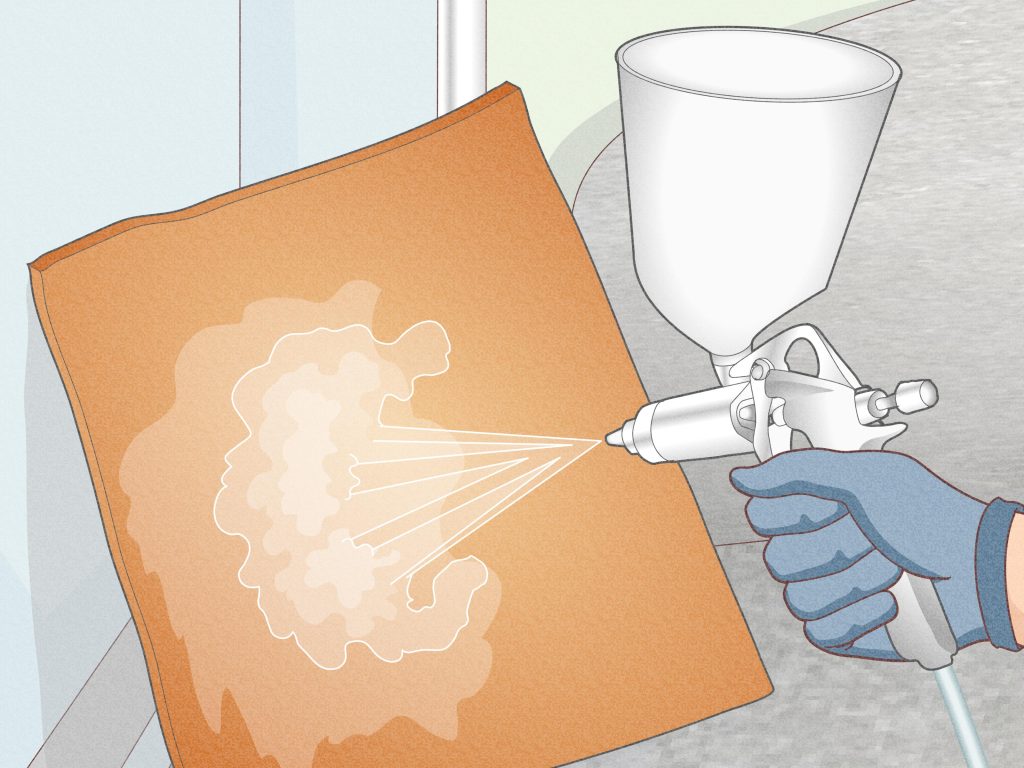
Method 2: HVLP Spray Gun Clear Coat The “Best Possible Finish” Route
If you’re clearing a full panel, a whole vehicle, or you want that deep “wet look” with consistent texture and film build, a proper spray gun setup is your best friend.
This method has the steepest learning curvebut it also delivers the most professional results when done right.
When to use a spray gun
- Full panels (hoods, doors, fenders)
- Complete resprays
- High-gloss finishes where consistency matters
- When you need enough film build to cut and polish
Gun setup basics (the “don’t wing it” section)
- Tip size: many production clears run well around 1.4–1.8 mm tips (check your product’s tech sheet).
- Pressure: HVLP is often referenced by cap pressure (commonly max ~10 PSI at the cap), while compliant guns may use higher inlet pressurefollow your gun and clearcoat TDS.
- Mixing: catalyzed clears require accurate mixing ratios. Use a mixing cup and don’t “eyeball” hardener unless you enjoy repainting.
Spray technique that actually works
-
Spray edges and jambs first (when applicable).
Many guides recommend hitting jams/edges first so you don’t overload them later while chasing coverage. -
Keep the gun perpendicular.
Don’t “arc” your wrist at the ends. Maintain distance and keep the gun square to the surface so the fan hits evenly. -
Use steady overlap.
A typical overlap is around 50% (some systems recommend higher overlap on wet coats). Consistency beats heroics. -
Apply medium-wet coats.
Many professional clearcoat systems call for two medium-wet coats with a controlled flash time between coats.
The goal is enough material to flow and level, not so much that it runs off the panel like it’s late for a meeting. -
Watch your flash time.
Clear needs time for solvents to escape. Too soon can trap solvents and cause defects; too late can reduce intercoat bonding depending on the system.
The surface is often ready for the next coat when it’s tacky but not stringy.
Film build: more isn’t always better
Thick clear can look amazinguntil it doesn’t. Excess film build increases the risk of runs, solvent pop, and longer cure times. Aim for the number of coats and
film build your clearcoat system recommends. If you want extra “cut and buff insurance,” choose a clear designed for that workflow rather than piling on extra coats
like you’re frosting a cake.
Drying and curing
Clear coat often becomes dust-free within an hour or so, but “safe to sand and polish” is a different milestone. If you plan to wet sand and buff, allow adequate cure time
based on the product systemrushing this is how people invent new swear words.
Method 3: Wipe-On or Brush-On Clear Coat The Woodshop & DIY Favorite
Not every clear coat job needs atomization, compressors, and a setup that looks like NASA is launching a fender.
For wood furniture, cabinets, crafts, and even some painted interior projects, wipe-on or brush-on polyurethane is reliable, forgiving, and easy to touch up.
Option A: Wipe-on poly (the “smooth finish for normal humans” method)
- Prep the surface. Sand smooth, remove dust, and make sure the surface is clean and dry.
- Apply with a lint-free cloth. Wipe on a liberal amount and spread it evenly with the grain.
- Let it dry. Many wipe-on polys dry in a few hours; follow the label.
- Lightly sand between coats. A quick scuff with fine paper (commonly around 220 grit) helps adhesion and levels dust nibs. Remove dust thoroughly.
- Repeat coats. Two coats may be enough for light use; more coats build better protection and depth.
Option B: Brush-on poly (classic, durable, but don’t overwork it)
The brush method is great for thicker build and fewer coats, but it punishes over-brushing. Use a quality synthetic brush for water-based products
(or the recommended brush for your finish), brush out evenly, and resist the urge to “fix” it while it starts to tack.
That urge is how bubbles and brush marks are born.
How to avoid bubbles and brush marks
- Stirdon’t shake. Shaking whips air into the finish. Stir slowly and let it sit if it looks foamy.
- Thin coats win. Multiple thin coats level better than one thick coat that drips off the edge like syrup.
- Stop brushing once it tacks. Lay it on, tip it off, and walk away like a grown-up.
- Control temperature and humidity. Many waterborne finishes specify minimum temperature and humidity limits for good flow and cure.
After the Clear: Leveling, Wet Sanding, and Polishing (Optional, But Addictive)
If you want that glassy, show-car look, you usually don’t “polish orange peel away.” Texture is a height differencepolish mostly smooths micro-scratches.
To truly level texture (orange peel, dust nibs), you typically sand first, then compound, then polish.
A safe, sensible approach
-
Let the clear cure.
Sanding too early can gum up paper and distort the finish. -
Start with the least aggressive grit that works.
For minor defects you may start around 2000; heavier texture may need 1500. Use a sanding block where appropriate and keep the surface lubricated. -
Refine your scratches.
Step up through finer grits (for example, 3000 and optionally 5000-style finishing abrasives) to reduce compounding time. -
Compound, then polish.
Compounding removes sanding marks; polishing refines gloss and clarity. Clean residue and inspect under strong lighting between steps.
Pro tip: don’t chase perfection through the clear
Clear coat has a finite thickness. If you aggressively sand and buff, you can burn through edges and high spotsespecially on sharp body lines.
If the job is a daily driver, “very good” can be smarter than “absolutely flawless.”
Troubleshooting Cheat Sheet
-
Runs / sags: too much material, too close, too slow, or not enough flash time.
Fix: let it cure, then level with careful sanding and polish. -
Orange peel: clear drying before it flows (wrong distance, speed, reducer/hardener choice, temperature, airflow).
Fix: improve spray technique; if cured, wet sand and polish. -
Fish eyes: contamination (silicone, oils, wax).
Fix: deep clean, proper prep, and avoid contaminated towels/products. -
Dust nibs: dirty environment or static.
Fix: clean area, tack properly, consider anti-static wipe; remove nibs after cure by spot sanding and polishing. -
Hazy finish after sanding: sanding scratches not fully refined or polishing step incomplete.
Fix: refine to a finer grit, then compound and polish in stages.
Conclusion
If you remember one thing, make it this: the method matters, but prep + timing matter more. Aerosol clear is your quick win for small jobs,
HVLP spray gun is the top-tier finish for panels and full resprays, and wipe/brush clears are unbeatable for wood and DIY projects that don’t need a spray booth
cosplay session.
Choose the method that matches your project, follow the product’s recoat windows and flash times, and don’t rush the cure. Clear coat loves confidence…
and it loves clean surfaces even more.
Real-World Clear Coat Lessons ( of Experience)
The first time I ever tried to apply clear coat “like the videos,” I learned a scientific truth: clear coat has a sixth sense for arrogance. I had a freshly prepped
panel, a brand-new can of clear, and the kind of optimism that only exists before you see your first run. I laid down what I thought was a “nice wet coat.”
The clear responded by forming a glossy river that slid down the panel in slow motion, like it was auditioning for a nature documentary. The lesson?
Wet coats are greatuntil they’re too wet. If you’re new, start slightly lighter than you think you need. You can always add another coat within the recoat window.
Fixing a run takes more time than spraying one extra coat ever will.
The second lesson came from dust. I once sprayed a small part in a garage that looked clean. Then the clear flashed and revealed a constellation of tiny specks.
It wasn’t that the air was dirtyit was that I had sanded something nearby earlier, and the dust had quietly settled everywhere like it paid rent.
Now I treat “spray day” like a different holiday than “sanding day.” I’ll wet the floor (lightly), wipe down surfaces, let the air calm down, and only then tack the part.
Even a quick pass with a tack cloth right before spraying can save you from that gritty surprise.
Third lesson: distance is everything with aerosols. Too far away and the clear dries mid-flight, landing as a texture that looks like a citrus fruit’s skin.
Too close and you’re back to the River Run Olympics. The sweet spot is usually around a hand-span awayclose enough that it stays wet, far enough that it doesn’t flood.
I also learned to move my whole arm, not just my wrist. The moment you start “flicking” the can, the fan pattern changes, the overlap gets weird, and texture shows up
in stripes. Smooth, boring passes are the secret sauce. Clear coat rewards boring.
Fourth lesson: don’t “fix it” while it’s drying. This is especially true with brush-on and wipe-on finishes. If you notice a tiny brush mark and go back over it
after the finish starts to tack, you’ll often create bubbles, ridges, or a gummy patch that looks worse than the original mark. The better move is to let the coat dry,
lightly scuff sand, and make the next coat the hero. Finishes are like toddlers: once they’re committed to a mood, you’re not negotiating.
Last lesson: polishing is a process, not a miracle. When I first started wet sanding, I thought polishing compound would magically erase everything.
What actually happened is I “polished” orange peel for a long time and achieved… shinier orange peel. Once I accepted that leveling comes first (careful sanding),
and polishing comes second (compound, then finer polish), the results got dramatically better. And I became much more respectful of edges and body linesbecause
burning through clear is the kind of memory that sticks with you forever, like an embarrassing yearbook photo.
