
32 Interesting Facts About Spain You Must Read Before Planning Your Trip
Th3
Spain looks simple on a mapone country, one peninsula, lots of sunshine. Then you land and realize it’s more like a
beautifully chaotic “choose your own adventure” book where every chapter has its own language, schedule, snack, and
festival that involves either fire, music, or an unreasonable number of tomatoes.
Below are 32 interesting facts about Spain that are actually useful for trip planningso you can book smarter, eat
better, and avoid showing up to lunch at 11:30 a.m. like a confused time traveler.
Geography & Regions: Spain Is Bigger (and More Complicated) Than Your Beach Photo
1) Spain has 17 autonomous communitiesplus two autonomous cities.
Spain isn’t “one-size-fits-all.” It’s divided into 17 autonomous communities with their own governments and strong
identities. Add two autonomous cities (Ceuta and Melilla) and you’ve got a country that runs on regional pride.
Translation: what’s “normal” in Madrid may not be normal in Galicia.
2) Yes, Spain has territory in Africa.
Ceuta and Melilla sit on the North African coast. It’s a mind-bender the first time you realize you can be in Spain
while looking at Morocco across the street (figuratively… sometimes literally).
3) Spain’s coastline is long enough to make “beach day” a personality.
Between the mainland and islands, Spain has thousands of kilometers of coastlineMediterranean coves, Atlantic surf,
and everything in between. That variety is why “Spain beach trip” can mean anything from laid-back Cádiz to
party-forward Ibiza.
4) Spain’s highest point is a volcano on Tenerife.
Pico del Teide (on the Canary Islands) is Spain’s highest peak and it’s volcanic. If your Spain itinerary includes
“sun, sangria, and suddenly… lunar landscapes,” you’re doing it right.
5) Spain uses two time zones.
Mainland Spain and the Balearic Islands run on Central European Time, while the Canary Islands are one hour behind.
You’ll even hear a classic phrase on Spanish TV: “una hora menos en Canarias” (“one hour less in the Canaries”).
It’s basically the national reminder that Spain is multitasking.
6) Madrid sits on a high plateauso seasons hit differently.
Spain’s interior is elevated, which means Madrid can roast in summer and feel surprisingly crisp in winter. Don’t pack
only “Mediterranean beachwear” if your trip includes inland citiesyour ankles will file a formal complaint.
7) “Green Spain” existsand it’s not just a marketing slogan.
Northern regions like Galicia, Asturias, Cantabria, and the Basque Country are cooler, wetter, and lush. If you want
dramatic cliffs, cider culture, and food that will ruin you for mediocre seafood forever, point your map north.
Language & Identity: Spain Speaks in Plural
8) “Spanish” is Castilianand it’s not the only official language.
Castilian Spanish is the national language, but several regions have co-official languages (like Catalan/Valencian,
Galician, and Basque). Practically, that means menus, road signs, and train stations may be bilingualand your map app
may show place names you don’t recognize at first glance.
9) Basque (Euskera) is famously unique.
Basque isn’t a Romance language and isn’t closely related to the languages around it. You’ll notice it immediately:
words look like someone set the alphabet to “hard mode.” It’s also a reminder that Spain’s history runs deeper than
any single empire.
10) Cities can have “double names,” and both are correct.
Think A Coruña/La Coruña or Donostia/San Sebastián. Tickets, museum labels, and road signs may use either version.
Pro tip: when booking transportation, match the station name on your ticket to the name used by your rail operator.
11) Regional pride shapes food more than you think.
Ask “What’s typical here?” instead of “What’s typical in Spain?” In Valencia, rice dishes have rules. In the
Basque Country, pintxos are practically competitive sports. In Andalucía, fried fish is a love language.
12) Spain’s national identity is layeredand that’s the point.
Spain is a constitutional monarchy with a modern democracy, but local traditions (saints’ days, neighborhood fiestas,
and regional customs) still drive a lot of everyday life. Travelers who treat Spain like a mosaicnot a monolithget a
richer trip.
Daily Rhythm & Etiquette: Spain Runs on Its Own Clock
13) Meals happen later than many Americans expect.
Lunch is often the main meal and commonly starts around 2 p.m. Dinner can begin at 8:30 p.m. or later, especially in
big cities. Plan your day like a Spaniard: small breakfast, late lunch, long evening, and strategic snacks that prevent
“hangry museum decisions.”
14) The “siesta gap” is real in smaller towns.
While big cities are less strict, many smaller places still slow down mid-afternoon. Shops may close for a few hours,
then reopen into the evening. If you need pharmacy items, tickets, or groceries, don’t wait until 3:30 p.m. and hope
for miracles.
15) Sundays can be wonderfully quiet (and inconvenient).
Many shops close on Sundays, and some areas feel like the whole country collectively decided to take a long walk and
then eat slowly. It’s charmingunless you need sunscreen, phone charger, or cold medicine that day.
16) Servers won’t rush youso you must ask for the check.
In many restaurants, the bill doesn’t arrive until you request it. That’s not bad service; it’s Spain’s way of saying,
“Relax. You’re alive. Eat your dessert.” Learn: “La cuenta, por favor.”
17) Tipping is lighter than in the U.S.
Service is typically included in wages and pricing. Many travelers simply round up, leave a couple euros for great
service, or tip modestly in nicer restaurants. If you tip 25% everywhere, Spain won’t stop youbut your budget might.
18) The emergency number is 112.
112 connects you to emergency services and works across the EU. It’s worth saving in your phone (and yes, it’s okay to
be the kind of person who plans for emergencies and still has fun).
Getting Around & Practical Planning: The “Trip Logistics” You’ll Be Glad You Knew
19) Spain is one of the world’s most-visited countriesand it’s hitting records.
Spain isn’t just popular; it’s globally top-tier. In recent years, international arrivals have reached record highs.
That’s great for energy and options, but it also means you should book major museums, trains, and high-demand
restaurants earlier than you thinkespecially in peak summer.
20) Spain’s high-speed rail network is massive.
The AVE and other high-speed services can turn what looks like a long-distance haul into an easy rideoften rivaling
flights once you factor in airports and security. For routes like Madrid–Seville or Madrid–Barcelona, trains can be a
trip-planning superpower.
21) Station names mattersometimes more than the city name.
Big cities can have multiple stations (and not all are central). Your ticket may say Madrid-Puerta de Atocha or
Barcelona Sants, and that detail determines whether you arrive stress-free or starring in your own “running through the
metro” montage.
22) Petty theft is a real issue in major tourist zones.
Spain is generally safe, but pickpockets and opportunistic theft happen in crowded areaspublic transit, tourist
hotspots, and busy nightlife zones. Use a crossbody bag, keep your phone off café tables, and treat your backpack like a
small, lovable liability.
23) You’ll need the right power adapter.
Spain uses 230V electricity and common European plug types (often Type C and Type F). Adapters are easy; frying your
hair straightener is less fun. Check voltage support before you plug in anything that heats up.
24) Tap water is usually finebut taste varies.
In many Spanish cities, tap water is treated and potable. That said, mineral content and taste can differ by region, so
you may see locals choosing bottled. If you’re sensitive, pick up a reusable bottle and refill where you’re comfortable.
Food & Drink: Spain Is a Culinary Map, Not a Single Menu
25) Tapas aren’t a coursethey’re a lifestyle.
Tapas culture is built around hopping: one drink, one bite, move along (or stay if the vibe is perfect). In some cities,
you may even get a small tapa with a drink. Either way, the strategy is the same: don’t over-order early. Spain always
has one more delicious thing to show you.
26) Spain produces about 40% of the world’s olive oil.
Olive oil shows up everywhere: drizzled on tomatoes, poured generously over salads, used in frying, and treated as a
flavornever an afterthought. If you want a delicious souvenir that fits in a suitcase, a quality bottle from Andalucía
is a surprisingly strong candidate.
27) Paella is from Valenciaand the best versions follow local rules.
In Valencia, paella is serious business. Traditional versions are made in a wide pan, cooked to develop that prized
crispy rice layer, and meant for sharing. If you see “paella for one” in a tourist-heavy area, consider it a gentle red
flag waving at you in the shape of a menu.
28) Jamón has tiersand labels matter.
You’ll see jamón serrano and jamón ibérico, and the price difference isn’t random. Ibérico (especially higher grades)
tends to be richer and more complex. If you’re unsure, ask for a small plate and do a taste testSpain encourages this
kind of decision-making.
Culture, History & “Only in Spain” Moments
29) Spain’s national anthem has no official lyrics.
“Marcha Real” is famously wordless. That’s why you won’t hear crowds belting it out before matchesno awkward forgotten
verses, no debates about rhyme schemes, just pure instrumental confidence.
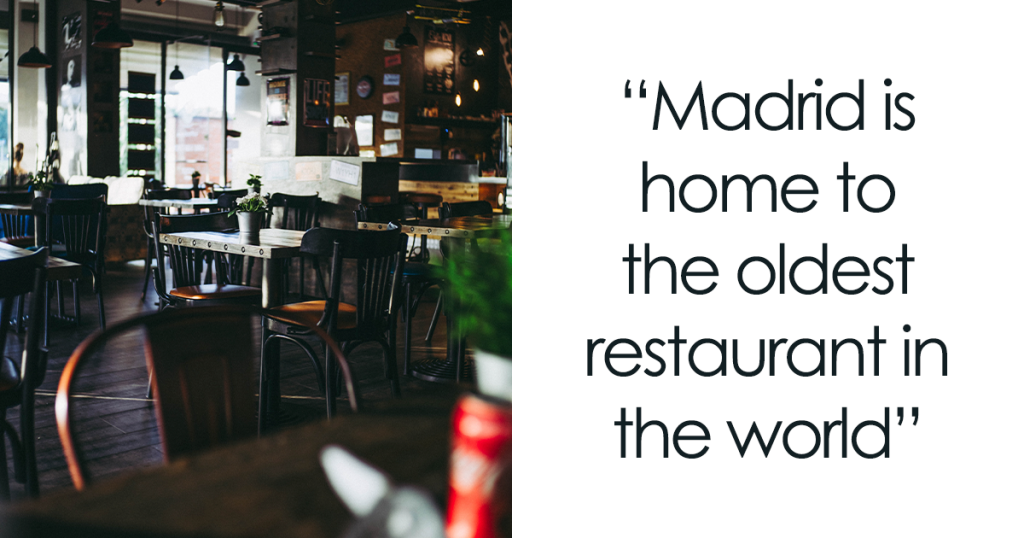
30) The world’s oldest operating restaurant is in Madrid.
Restaurante Botín is recognized by Guinness World Records as the oldest restaurant in the world (opened in 1725).
Whether you go for the history, the roast, or the bragging rights, it’s a distinctly Madrid kind of flex.
31) Spain has 50 UNESCO World Heritage properties.
Spain’s UNESCO list is stacked: Roman sites, medieval cathedrals, Moorish palaces, and modernist architecture. The
traveler advantage: you can build an entire Spain itinerary around “greatest hits” and still stumble into something
world-class by accident.
32) Spain’s festivals are iconicand they follow the calendar like clockwork.
Spain throws celebrations like it’s a national sport. Examples include La Tomatina in Buñol (August), San Fermín in
Pamplona (July), and Semana Santa processions in spring. Even if you’re not “a festival person,” Spain has a way of
turning you into oneusually by handing you a snack and starting a parade.
A Traveler-Style Add-On: What These Spain Facts Feel Like in Real Life (About )
Reading Spain travel tips is helpful. Feeling them in the wild is even better. Here are five “mini-experiences” you’ll
recognize once you’re on the groundbuilt directly from the facts above, and weirdly accurate even if you’ve never been
to Spain before.
Experience #1: The Great Lunch-Time Reality Check
You wake up, explore, andlike a responsible humantry to eat lunch at noon. The city responds by politely offering you
a coffee and a pastry while restaurants prepare to open in what feels like the distant future. Around 2 p.m., suddenly,
everything comes alive. Locals settle into long tables, menus expand, and lunch becomes an event. You learn the Spain
rule: if you’re hungry at American lunch time, you’re not earlyyou’re just pre-snack.
Experience #2: The “Where Did Everyone Go?” Afternoon
It’s 3:30 p.m. You decide it’s the perfect time to buy sunscreen, a SIM card, and a souvenir magnet shaped like a bull.
Half the shops are closed. The streets feel calmer. You start to wonder if you accidentally booked a trip to a movie set
between takes. Then, later in the evening, the same stores reopen and the city has energy again. Spain isn’t closedit’s
recharging. You adapt by doing what locals do: slow down, grab something cold, and accept that time is a suggestion.
Experience #3: Tapas Turns You Into a Food Strategist
The first night, you order too much too soon because the menu is exciting and you are only human. The second night, you
master the rhythm: one drink, one bite, keep it moving. You try something new in every barseafood here, jamón there,
a mysterious croquette that tastes like comfort and ambition. Tapas doesn’t just feed you; it organizes your night into
little joy checkpoints.
Experience #4: The Train That Makes Flying Feel Like a Chore
You arrive at the station, get on a sleek train, and watch the countryside stream past like a moving painting. The trip
is fast, comfortable, and drops you near the center of your next cityno airport gymnastics required. You start doing
mental math: “Wait, why would I fly for this route?” Spain’s rail system quietly upgrades your itinerary, letting you
combine cities that would feel exhausting elsewhere.
Experience #5: You Accidentally Walk Into a World-Class Moment
You turn a corner and find a cathedral that looks like it was designed by someone who had unlimited budget and a deep
desire to impress the heavens. Or you stumble into a neighborhood procession, candles and music filling the street.
Or you see architecture that makes you pause mid-sentence. Spain does that: it normalizes the extraordinary. The big
lesson isn’t just “Spain has a lot to see”it’s “leave room in your schedule for surprise awe.”
Conclusion
The best Spain trips aren’t just about where you gothey’re about how you plan. Knowing Spain’s regions, rhythms, food
culture, transit advantages, and safety realities helps you build an itinerary that fits the country instead of fighting
it. Use these 32 interesting facts about Spain as your cheat sheet, and you’ll spend less time confused by closed shops
and more time doing what Spain does best: eating well, moving slowly, and turning ordinary days into something worth
talking about long after you get home.
