
Antonio Aricò’s Beech Wood Chopping Blocks
Th5
Some kitchen tools whisper. Some shout. Antonio Aricò’s Beech Wood Chopping Blocks do something better: they stand quietly on the counter like they have seen three generations of tomatoes, bread, cheese, salumi, and one overconfident uncle with a cleaver. These are not shiny gadget-store cutting boards pretending to be heirlooms. They are rustic, simple, tactile blocks of beech wood designed around an idea that feels almost rebellious today: a kitchen object should get better with use.
At first glance, the concept seems straightforward. A piece of wood. A surface. A place to chop. But Aricò, an Italian designer from Reggio Calabria known for blending craft, memory, and contemporary design, turns the humble wooden chopping block into a small domestic sculpture. It is not over-designed. It does not need Bluetooth. It does not ask you to download an app before slicing an onion. It simply sits there, waiting to become part of daily life.
The main keyword here is Antonio Aricò’s Beech Wood Chopping Blocks, but the real story is bigger than a product name. It is about beech wood, rustic Italian kitchenware, hand-shaped objects, cutting board care, and the warm imperfection of tools made to age honestly.
Who Is Antonio Aricò?
Antonio Aricò is an Italian artist, designer, and creative director whose work often sits between art, craft, and product design. Born in Reggio Calabria, he built a practice that draws heavily from Southern Italian tradition while speaking in a contemporary design language. His background includes studies connected to design and tradition, and his portfolio moves comfortably from furniture and lighting to ceramics, kitchen objects, and playful domestic pieces.
What makes Aricò interesting is not only what he designs, but how he frames design itself. His objects often feel like memories that learned how to stand upright. They have humor, restraint, and a strong relationship with material. Instead of hiding craft marks, he often lets them become part of the personality of the object. That approach is central to his beech wood chopping blocks.
The Story Behind the Beech Wood Chopping Blocks
Antonio Aricò’s Beech Wood Chopping Blocks are described as slices of beech wood that are instinctively and simply cut. That phrase matters. “Instinctively” suggests that the blocks are not trying to become mathematically perfect slabs. They borrow from older wooden boards used for heavy chopping, the kind of kitchen surface that belonged to homes where cooking was not a performance but a rhythm.
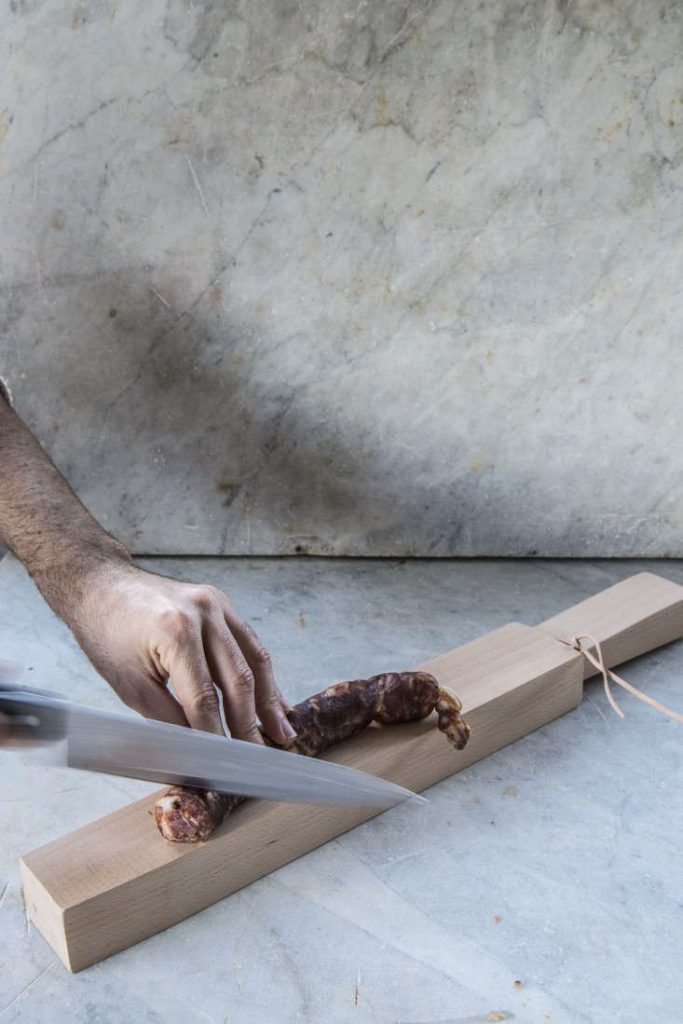
The blocks were part of a rustic kitchenware family that included utensils, rolling pins, and cheese graters. In that collection, Aricò looked back to the kitchen objects of his grandfather’s world: simple wooden tools, hanging on walls, made for real work. The chopping blocks came in different sizes, including a narrow version suited to serving salumi. That detail is charming because it places the object right where it belongs: between preparation and presentation.
Unlike a decorative board that trembles at the sight of a knife, these beech wood chopping blocks invite contact. The design goal is not to remain flawless. The surface is expected to collect knife marks over time. Those cuts are not defects; they are the visual record of meals prepared, guests fed, and snacks assembled at suspiciously late hours.
Why Beech Wood Works So Well in the Kitchen
Beech wood is a practical choice for chopping blocks because it is strong, relatively dense, and traditionally used in European kitchen tools. It has a pale, warm tone that fits rustic, modern farmhouse, Mediterranean, and minimalist kitchens without behaving like it is auditioning for a luxury hotel lobby.
For cutting boards, hardwood matters. A good board needs enough firmness to resist deep gouging, but it should not be so hard that it bullies your knives into dullness. Beech sits in that useful middle ground. It can handle regular slicing and chopping while still feeling friendlier under the knife than glass, stone, or metal surfaces. Those harder materials may look sleek, but they are often terrible roommates for a sharp blade.
Beech also has a fine, relatively closed grain, which helps make it suitable for kitchen use when properly maintained. Like all wood, it is not magic. It needs washing, drying, and oiling. But cared for correctly, a beech wood chopping block can become a long-term kitchen companion rather than a disposable surface.
Design Analysis: Rustic, But Not Rough Around the Brain
The cleverness of Antonio Aricò’s Beech Wood Chopping Blocks lies in their refusal to over-explain themselves. Many contemporary kitchen objects arrive with dramatic curves, aggressive branding, and packaging that uses the word “artisan” so many times it starts to sound like a hostage note. Aricò’s blocks go in the opposite direction. They rely on proportion, material, and memory.
Their rustic quality is not a costume. A chopping block that references old heavy kitchen boards makes sense because chopping is an ancient action. Before electric mixers, silicone gadgets, and countertop appliances with more settings than a spacecraft, there was a knife, a surface, and something that needed to be cut. Aricò’s design respects that simplicity without turning it into nostalgia soup.
The blocks also work as display pieces. A narrow board can serve cured meats, cheese, bread, olives, or fruit. A larger block can anchor a prep station. Even when not in use, the beech wood surface adds warmth to a kitchen. Place one against a backsplash, and suddenly the counter looks less like a lab and more like someone might make fresh pasta there. Whether or not fresh pasta actually happens is between you and your calendar.
How These Chopping Blocks Fit Modern American Kitchens
American kitchens have gone through a long love affair with stainless steel, marble counters, open shelving, and “effortless” styling that often requires heroic effort. Antonio Aricò’s Beech Wood Chopping Blocks fit neatly into this world because they offer texture without clutter. They pair well with white cabinetry, soapstone counters, butcher block islands, terracotta tiles, brass fixtures, and even very modern black-and-white kitchens that need one object with a pulse.
They also match the growing appreciation for useful objects that do not look disposable. A wooden chopping block can be part prep tool, part serving board, and part visual anchor. Instead of hiding it in a cabinet, many cooks leave it out because it earns its space. The more it is used, the more personal it becomes.
That is the opposite of many kitchen products, which look best the day they are unboxed and slowly lose their charm. Aricò’s idea is different: the future patina is part of the design. The first knife mark may hurt a little. The fiftieth becomes character. The five-hundredth means the board has done its job.
Best Uses for Antonio Aricò’s Beech Wood Chopping Blocks
Everyday Vegetable Prep
For onions, carrots, celery, herbs, apples, pears, and bread, a beech wood chopping block is a pleasure to use. The surface has enough give to make chopping feel grounded, not harsh. A stable wooden block also reduces the annoying board-slide dance, especially if you place a damp towel or thin non-slip mat underneath.
Serving Cheese, Salumi, and Bread
The narrow version of Aricò’s chopping block is especially suited for salumi, but the whole concept works beautifully for relaxed serving. Add aged cheddar, prosciutto, olives, figs, walnuts, and sliced baguette, and the board becomes a casual centerpiece. It says, “I planned this,” even if the plan was mostly opening the fridge and believing in yourself.
Rustic Kitchen Styling
Because the blocks are visually simple, they can sit behind a sink, lean against a tile wall, or rest on open shelving. They work with European rustic kitchens, modern farmhouse interiors, Mediterranean homes, and minimalist spaces that need a soft natural element.
How to Care for a Beech Wood Chopping Block
Wooden chopping blocks are durable, but they do not enjoy being treated like plastic. The basic rules are simple: wash by hand, avoid soaking, dry thoroughly, and oil regularly. After each use, clean the board with warm water and mild dish soap. Scrub away food residue with a sponge or soft brush, rinse, and dry it with a clean towel. Then stand it upright so air can circulate around both sides.
Do not leave a beech wood chopping block submerged in a sink. Wood absorbs water, and too much moisture can cause warping, cracking, or splitting. The dishwasher is also a risky place for a solid wood board, especially if the piece has character, thickness, or handmade qualities. Dishwashers are wonderful for plates and deeply questionable for beloved wooden objects.
For maintenance, use food-grade mineral oil or a board conditioner made with mineral oil and beeswax. Apply a thin coat to a clean, dry board, let it soak in, and wipe away the excess. Monthly oiling is a practical routine for many home kitchens, though a frequently used or very dry board may need attention sooner. If the beech wood looks pale, thirsty, or dull, it is politely asking for oil.
Food Safety: Beautiful Does Not Mean Carefree
A wooden chopping block can be safe and practical, but smart food habits matter. Use separate cutting boards for raw meat, poultry, seafood, and ready-to-eat foods such as bread, vegetables, and fruit. This helps reduce cross-contamination. If you love your beech wood board for bread, cheese, herbs, and produce, keep a different board for raw chicken. Your dinner guests will never know, and your digestive system may send a thank-you card.
Deep grooves and cracks are warning signs. Over time, all chopping boards develop marks, but cuts that are too deep can trap food particles and bacteria. A surface full of normal knife wear can be charming; a board with serious cracks should be retired from food prep or repurposed for display.
Sanitizing can be done when needed, especially after high-risk foods. Many food-safety recommendations use a diluted unscented bleach solution for cutting boards, followed by a thorough rinse and complete drying. Always follow safe dilution guidance and avoid harsh habits that damage the wood. The goal is not to punish the board; it is to keep the kitchen clean.
Beech Wood Versus Plastic, Bamboo, and Glass
Plastic cutting boards are lightweight, inexpensive, and often dishwasher-safe. They are useful for raw proteins because they can be cleaned aggressively. However, they can develop grooves and may need replacement once heavily worn. Bamboo boards are popular because they are dense and renewable, but some cooks find them harder on knives. Glass boards are easy to clean but notoriously unfriendly to knife edges. They are better as cheese plates than serious chopping surfaces.
Beech wood offers a more balanced experience. It is warm, stable, attractive, and pleasant under a knife. It asks for more care than plastic, but it gives more back visually and emotionally. Nobody has ever leaned a plastic board against a backsplash and said, “Ah, the poetry of lunch.” With beech wood, that sentence becomes only mildly ridiculous.
Why the Aging Process Is the Point
The most interesting part of Antonio Aricò’s Beech Wood Chopping Blocks is the promise that they will age beautifully. In a culture obsessed with keeping things new, this is refreshing. A cutting board that records use is a reminder that kitchens are living rooms with knives. They are places where repetition becomes ritual.
A scratch from slicing tomatoes, a pale mark from bread, a darker tone after oiling, a softer edge after years of handling: all of these changes turn the object into something personal. The block becomes less like a product and more like a witness. It remembers weekday breakfasts, holiday boards, emergency grilled cheese, and the ambitious soup that somehow used every pot in the house.
Buying and Styling Tips
If you are looking for Antonio Aricò’s Beech Wood Chopping Blocks or similar artisanal beech wood chopping blocks, consider size, thickness, and intended use. A smaller board is excellent for serving and quick prep. A larger block is better for serious chopping and counter presence. Look for solid construction, comfortable weight, and a finish suitable for food contact.
For styling, keep it simple. Pair a beech wood chopping block with a linen towel, a ceramic bowl of lemons, a small salt cellar, or a good chef’s knife. Do not overcrowd the scene. The charm of this object is its plainspoken confidence. It does not need backup dancers.
Experience Notes: Living With a Beech Wood Chopping Block
The first experience with a beech wood chopping block is usually tactile. It feels different from thin plastic or bamboo boards. There is weight, warmth, and a soft firmness under the knife. When you chop herbs on it, the sound is lower and calmer. Instead of the sharp clack of blade against plastic, you get a more grounded rhythm. It makes even a Tuesday salad feel a little more intentional.
Using a board like Antonio Aricò’s Beech Wood Chopping Blocks also changes how you move in the kitchen. Because it looks good enough to leave out, it becomes the default work surface. You reach for it to halve lemons, slice bread, mince parsley, or assemble a snack plate. Over time, this convenience matters. A tool that stays visible gets used. A tool that gets used becomes familiar. A familiar tool becomes part of how you cook.
There is also a small emotional adjustment. Many people feel nervous about marking a beautiful wooden board. The first cut can feel like scratching a new notebook. But that hesitation fades quickly. Once the board has a few marks, it relaxes. You relax too. Suddenly it is not a precious object sitting outside real life; it is participating. This is where Aricò’s design philosophy becomes practical. The object is not ruined by use. It is completed by use.
For entertaining, a beech wood chopping block is one of the easiest ways to make food look generous. A few slices of cheese, folded salami, toasted nuts, grapes, and torn bread can look restaurant-level when arranged on warm wood. The board provides contrast and texture. It also makes serving feel casual rather than fussy. Guests can gather around it, pick what they like, and pretend they will not finish the last piece of cheese. Someone always finishes the last piece of cheese.
The care routine becomes part of the experience as well. Washing, drying, and oiling the board may sound like maintenance, but it can feel satisfying. When mineral oil darkens the beech slightly and brings out the grain, the board looks refreshed. It is a small kitchen ritual that rewards attention. Unlike many modern products that fail mysteriously and demand replacement, a wooden chopping block tells you what it needs. Too dry? Oil it. Too wet? Dry it upright. Deeply cracked? Retire it with dignity.
The best long-term experience is watching the board become specific to your home. Its marks will not match anyone else’s. Its color will shift according to your light, your oiling habits, your meals, and your hands. That is why Antonio Aricò’s Beech Wood Chopping Blocks are more than attractive rustic kitchen accessories. They are practical reminders that good design does not always need to be polished, perfect, or loud. Sometimes it just needs to be honest, useful, and ready for another loaf of bread.
Conclusion
Antonio Aricò’s Beech Wood Chopping Blocks celebrate the rare kitchen object that is both simple and memorable. They connect Italian craft, beech wood durability, rustic design, and everyday cooking into one humble surface. Their beauty is not frozen at the moment of purchase. It develops through slicing, serving, oiling, and time.
For anyone who loves artisanal kitchenware, European rustic style, or tools that feel human rather than manufactured into bland perfection, these chopping blocks offer a thoughtful alternative to ordinary cutting boards. They are useful, warm, and quietly poetic. Most importantly, they understand what every good kitchen eventually teaches: the best objects are not the ones that stay untouched. They are the ones that earn their marks.
