
Guide to Unclogging a Blocked Toilet Trap
Th2
The moment a toilet stops doing its one job, the bathroom becomes a suspense film: will it drain… or will it flood? Most “sudden toilet disasters” are clogs stuck in the toilet’s trap (also called the trapway)the built-in curved channel that holds water to block sewer gas, but occasionally decides to hold your dignity hostage.
This guide shows you how to unclog a blocked toilet trap safely and effectivelystarting with the right plunging technique and graduating to the tool plumbers love: the toilet auger (closet auger/toilet snake). You’ll also learn what not to do, how to spot a bigger drain problem, and how to prevent repeat clogs.
What Is the Toilet Trap (and Why It Clogs So Easily)?
Inside the toilet’s porcelain body is an S-shaped passage. That bend creates a water seal (good). It also creates a choke point where paper wads, wipes, and “mystery objects” can wedge (less good). Because the trap is part of the toilet, many clogs happen before waste even reaches your drain linemeaning you can often fix it without touching anything in the wall.
Signs the clog is in the trapway
- Only one toilet is affected; sinks/tubs drain normally.
- The bowl fills, then drains slowly (or not at all).
- Plunging changes the water level or creates gurgling.
Signs it’s beyond the toilet
- Multiple fixtures back up or gurgle when you flush.
- Water shows up in a shower/tub during a flush.
- You get repeat backups across days, not minutes.
Quick Diagnosis: What Kind of Clog Are You Dealing With?
Knowing the “clog personality” saves time (and reduces splashing).
- Soft clog (paper/organic): water rises but eventually creeps down. Soap + hot water and good plunging usually work.
- Dense clog (wipes buildup): recurring, stubborn, and often feels “spongy.” A toilet auger is usually the fastest fix.
- Hard obstruction (toy/brush cap): the toilet can go from normal to fully blocked in one flush. You may feel a solid stop with an auger.
- Main-line issue: multiple drains act weird together. That’s when you stop focusing on the trapway and start thinking “call for backup.”
First, Prevent an Overflow (Do This Before Anything Else)
- Stop flushing. “One more try” is how floors get ruined.
- Turn off the water at the supply valve behind the toilet (clockwise).
- Lift the tank lid. If the tank is still filling, raise the float to stop it, or confirm the supply valve is fully closed.
- Lower the bowl water level if it’s high: scoop into a bucket with a cup. Less water = cleaner plunging.
- Lay towels around the base. Future-you will be grateful.
Use the Right Tools (Your Arms Will Thank You)
- Flange plunger: made for toilets; the rubber “collar” seals in the drain opening.
- Toilet auger (closet auger): designed to navigate the trapway without scratching porcelain.
- Bucket, gloves, and disinfectant: because… toilets.
- Flashlight (optional): for spotting an obstruction near the bowl outlet.
Method 1: Plunge the Toilet Trap Correctly
Plunging isn’t about violence. It’s about pressure. A good seal turns your plunger into a pump that moves water through the trapway and breaks the clog’s grip.
Steps
- Add water if needed so the plunger head is submerged.
- Seat the flange in the drain opening and press down slowly to push out trapped air.
- Pump steadily for 20–30 seconds while maintaining the seal (push and pull).
- Check progress: if the water drops or you hear a strong drain sound, you’re close.
- Repeat once or twice. Most trapway clogs give up within a few rounds when technique is solid.
- Test safely: pour a bucket of water into the bowl. If it drains fast, turn the supply back on and flush once.
If you’ve done two or three rounds with no meaningful change, stop and switch tools. That’s not quittingit’s being efficient.
Method 2: Dish Soap + Hot Water (For Paper/Organic Clogs)
Dish soap lubricates; hot water softens and helps carry material through. This method is best when the clog is “too much toilet paper” rather than “someone flushed a Lego.”
- Pour 1/2 to 1 cup of dish soap into the bowl.
- Wait 20–30 minutes.
- Add about 1 gallon of hot water (not boiling) from a bucket.
- Wait 10–15 minutes, then try a flush or a bucket test.
Pro move: if the water level drops but doesn’t fully clear, follow with a proper plunging round. Soap + pressure is a great combo.
Don’t use boiling water. Porcelain can crack from thermal shock, and that’s an upgrade you didn’t budget for.
Method 3: Baking Soda + Vinegar (A Gentle Assist)
For minor, soft clogs, fizzing can help loosen buildup. It’s not a substitute for a plunger or auger, but it can be a helpful warm-up act.
- Add 1 cup baking soda, then 1–2 cups vinegar.
- Let it fizz for 30 minutes.
- Follow with hot (not boiling) water, then test.
Never combine this with commercial drain cleaners or other chemicals.
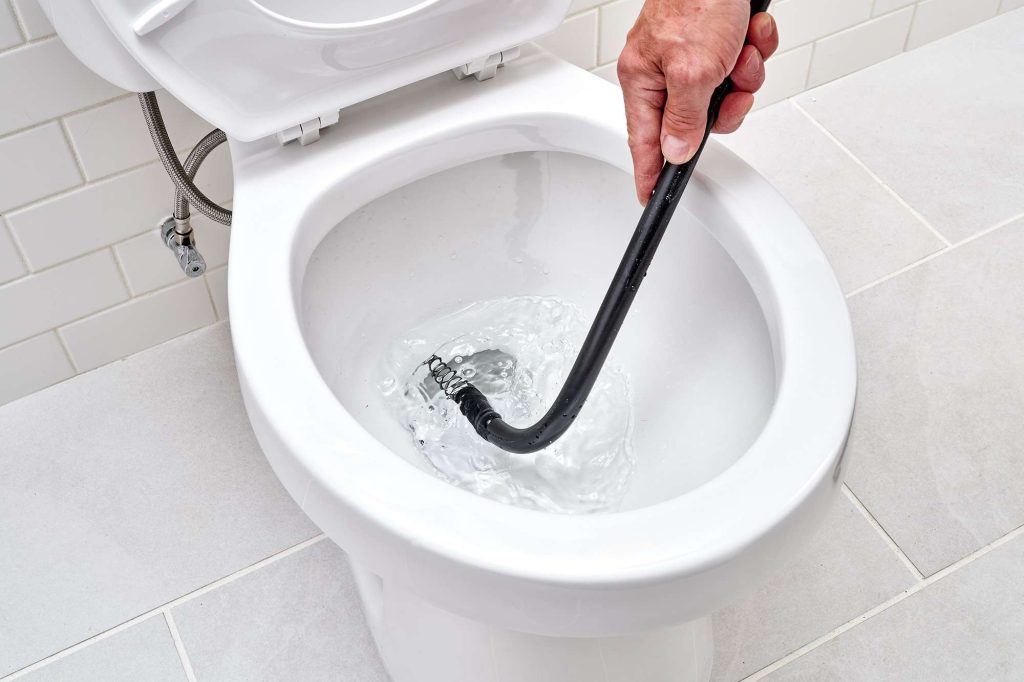
Method 4: Clear the Trapway with a Toilet Auger (Most Reliable DIY Fix)
A toilet auger is built for the toilet’s curves. If plunging fails, this is usually your fastest path back to normal life.
Steps
- Retract the cable so the tip is inside the auger’s curved end.
- Insert the curved end into the bowl outlet; keep the protective sleeve against porcelain.
- Crank clockwise while gently pushing to feed the cable through the trapway.
- When you hit resistance, keep turning with light pressure to break up or hook the clog.
- Back off, then re-advance if needed. A brief reverse can help the tip bite.
- Retract slowly. If debris comes out, remove it carefully (no heroicsjust a trash bag).
- Bucket test, then flush normally once it drains freely.
If the auger hits something hard and won’t move
That’s often a foreign object. Don’t escalate forceespecially if you’re renting. At this point, the choices are (1) a careful retrieval attempt if it’s near the bowl outlet, (2) pulling the toilet to remove the object from the bottom, or (3) calling a plumber.
If You’re Considering Pulling the Toilet, Here’s the Reality Check
Removing a toilet can be totally doable, but it’s not “five minutes and a vibe.” You’ll need to shut off water, disconnect the supply line, remove the bolts, lift the toilet (it’s heavier than it looks), and replace the wax ring or gasket when reinstalling. If the clog is clearly a hard object and the auger can’t grab it, pulling the toilet can be the cleanest way to remove it from the outlet side. If any of that sounds miserableor you have one bathroomcalling a plumber is a reasonable act of self-care.
What Not to Do
- Don’t use chemical drain cleaners in the toilet. They can be corrosive, hazardous if splashed, and useless against solid objects. If the clog holds, the chemicals just sit there waiting to ruin your day.
- Don’t keep flushing to “push it through.” That’s how overflows happen.
- Don’t improvise with sharp tools (coat hangers, screwdrivers) unless you’re protecting the porcelain; scratches collect grime and can lead to future problems.
Cleanup and Disinfecting (Because You’re About to Touch a Toilet)
Once the toilet is draining again, finish strong:
- Bag and discard any debris you pulled out.
- Wash tools with hot soapy water. If you disinfect, follow the product label and keep the area ventilated.
- If using bleach solutions, never mix bleach with ammonia or other cleaners, and don’t use bleach in an unventilated space.
When to Call a Plumber
- More than one drain is backing up, or fixtures gurgle together.
- You suspect a foreign object and the auger can’t retrieve it.
- Clogs return repeatedly, even after correct plunging/auger use.
- You see sewage, overflow, or water damage risk.
Why Clogs Keep Coming Back (and How to Stop the Loop)
If your toilet becomes a repeat offender, it’s often one of these:
- Weak flush: low tank water level or a flapper that closes too quickly can reduce the “push” that clears the trapway.
- Rim jet buildup: mineral deposits can reduce flushing power over time.
- Wipes and “non-paper” flushing: even occasional use can create snag points downstream.
- Drain/vent issues: gurgling and multi-fixture symptoms point to a bigger system problem.
Prevention Tips That Actually Work
- Flush only the “3 Ps”: pee, poo, and toilet paper. Wipes (even “flushable”) are frequent clog-starters.
- Use reasonable paper amounts, especially with low-flow toilets. If needed, flush in stages.
- Keep a flange plunger and toilet auger in the house. Cheap insurance, high dignity.
- Do a quick “toilet rules” talk if kids are around. The trapway is not a toy portal.
Conclusion
Most blocked toilet traps can be handled with calm steps and the right tool order: stop overflow, plunge properly, then use a toilet auger if needed. Skip chemical drain cleaners, watch for signs of a main-line issue, and keep prevention habits simple. Your toilet trapway can be a loyal employee againit just needs occasional “management.”
Field Notes: of Real-World Toilet Trap Experiences
Ask enough homeowners (and any plumber who answers their phone on a Sunday) and you’ll hear the same trapway stories on repeat. These experiences aren’t meant to scare youthey’re meant to save you from the two biggest mistakes: using the wrong tool and doubling down on the wrong strategy.
1) The “Paper Burrito” That Pretends to Leave
A classic trap clog is a thick wad of toilet paper that swells and wedges in the bend. A few angry plunges might drop the water level, giving you hope… until the next flush rehydrates the remaining wad and you’re back where you started. The lesson people learn the hard way: plunging must be consistent and followed by a bucket test. If it drains but feels sluggish, a quick auger pass often finishes the job by pushing the last bits beyond the trap.
2) The Flushable Wipe Ambush
Households often report “random” clogs that show up after weeks of apparently normal flushing. Wipes can snag farther into the trapway and act like a tiny net, catching paper until the blockage grows big enough to stop everything. In these stories, chemical cleaners do nothing (they can’t dissolve fabric-like material), and repeated flushing just packs the net tighter. What works most often is a toilet augerslow, controlled cranking to hook or tear up the mass. The long-term takeaway is blunt: if you want fewer clogs, wipes belong in the trash, not the toilet.
3) The Kid Toy Surprise (or: Gravity Is a Prankster)
When a toilet goes from fine to fully blocked in one flush, a foreign object is a prime suspect: small toy parts, toothbrushes, deodorant caps, even the occasional measuring spoon that slipped from a pocket. Here’s the pattern: plunging can wedge the object tighter, and aggressive snaking can scratch porcelain. Successful fixes usually come from gentle auger work (trying to hook the object) or from removing the toilet to push it out from the bottom. If you feel a solid “stop” that won’t budge, pause and switch to retrieval modeor call help before the situation escalates.
4) The “It’s Not the Toilet” Plot Twist
Some homeowners celebrate a cleared clog, only to have it returnplus they notice gurgling in a nearby tub or sink. That’s often the trapway acting as the first warning sign of a bigger drain problem. A partially blocked branch line or main line can slow everything down; the toilet just complains the loudest. The lesson: if multiple drains are acting up, the fix isn’t better plungingit’s diagnosing the line.
5) The Cleanup That People Forget
The final experience is unglamorous but real: once the toilet drains, people rush to move on. The smarter move is basic hygienebag debris, disinfect surrounding surfaces, and wash tools before storing them. A clean finish prevents odors, bacteria, and that lingering “why is the bathroom sticky?” mystery that nobody wants to own.
In short: most toilet-trap horror stories end well when you use water control, the right seal, and the right tool at the right timepreferably before you’ve panic-texted everyone you know.
