
Homemade German Sauerkraut Recipe
Th3
Sauerkraut is proof that cabbage can have a glow-up. Give it salt, time, and a comfy little brine blanket, and it transforms into something tangy, crunchy, and downright heroic next to bratwurst. “German sauerkraut” is typically the classic, clean version: fermented green cabbage with salt, sometimes kissed with caraway, juniper, or bay leafno vinegar shortcuts, no sugar rush, just old-school lactic fermentation doing what it does best.
This guide gives you an authentic homemade German sauerkraut recipe with the “why” behind each step, so you’re not just following instructionsyou’re running a tiny, delicious science project that you can eat with a fork.
What Makes It “German” Sauerkraut?
In Germany and German-American kitchens, classic kraut is usually:
- Green cabbage (white cabbage in European terms), thinly shredded
- Salt-forward (enough to pull brine and steer fermentation)
- Simple spices like caraway seed, juniper berries, bay leaf, or peppercorns (optional, but traditional)
- Fermented, not pickled with vinegarso it develops deeper flavor over time
Why Make Sauerkraut at Home?
- Flavor control: Keep it mild and crunchy or let it go “old-world tangy.”
- Texture control: Homemade kraut can stay snappy instead of sad and limp.
- Ingredient control: Just cabbage + salt (and spices if you want). No mystery preservatives.
- Budget-friendly: A single cabbage makes a generous batch.
Ingredients
Base (Traditional)
- Green cabbage: 1 medium head (about 2 to 2.5 lb / 900 to 1150 g after trimming)
- Non-iodized salt: 2% of cabbage weight (see salt math below)
Optional “German-Style” Spices
- 1 to 2 teaspoons caraway seeds
- 4 to 8 juniper berries, lightly crushed
- 1 to 2 bay leaves
- 1/2 teaspoon black peppercorns
Keep spices optional. Traditional doesn’t mean mandatoryit means you’re allowed to be minimal and still be correct.
Tools You’ll Need
- A large mixing bowl
- A kitchen scale (highly recommended for consistent salt)
- A wide-mouth quart jar (or a fermentation crock)
- A weight to keep cabbage submerged (glass fermentation weight, small jar, or a clean, food-safe setup)
- Optional but nice: airlock lid (reduces oxygen and fuss)
The Salt Math (Because Kraut Loves Consistency)
A reliable German-style kraut lands around 2% salt by weight. That means:
- Weigh your shredded cabbage in grams.
- Multiply by 0.02.
- That number = grams of salt to add.
Example: 1000 g cabbage × 0.02 = 20 g salt.
No scale? Many U.S. extension-tested recipes also use a classic reference point: roughly 3 tablespoons of canning/pickling salt per 5 lb of cabbage. (Weighing is still the best way to avoid “Oops, I used fluffy salt” situations.)
Step-by-Step Homemade German Sauerkraut
1) Prep the Cabbage
- Peel off any limp outer leaves and set aside one clean, sturdy leaf (you can use it as a “cap” later).
- Quarter the cabbage, cut out the core, and shred thinly (knife or mandoline).
- Weigh the shredded cabbage (or estimate using the 5 lb method if you must).
2) Salt It and Massage Like You Mean It
- Put cabbage in a big bowl.
- Add the measured salt (and optional spices).
- Massage, squeeze, and toss for 5 to 10 minutes until the cabbage looks glossy and starts releasing liquid.
This is the moment the cabbage realizes it has responsibilities. You’re drawing out water to create brine and setting the stage for the good bacteria.
3) Pack It Tightly (Brine Is the Goal)
- Pack cabbage into your jar or crock a handful at a time.
- After each handful, press down firmly (fist, tamper, spoonwhatever works).
- Keep packing until the liquid rises above the cabbage. You want the cabbage fully submerged.
4) Keep Cabbage Under Brine
Oxygen is the drama starter of fermentation. Keep cabbage under brine to discourage mold and support clean fermentation.
- Place the reserved cabbage leaf on top as a “lid.”
- Add a fermentation weight (or another clean weight) to keep everything submerged.
- Leave at least 1 to 2 inches of headspacekraut can bubble up like it’s auditioning for a soda commercial.
5) If There Isn’t Enough Brine, Top It Off
Usually the salt + massage makes plenty of liquid. If not, top with cooled brine made from:
- 1 1/2 tablespoons salt per 1 quart (4 cups) water, boiled and cooled
6) Ferment at the Right Temperature
A steady room temp helps flavor and texture. Common guidance:
- 70 to 75°F: often ready in about 3 to 4 weeks
- 60 to 65°F: slower, often 5 to 6 weeks
- Too warm (above ~75°F): can get soft faster
Place the jar on a plate or tray to catch overflow. If you’re using a standard lid (not an airlock), “burp” it daily for the first week to release pressure.
How to Know When It’s Done
Sauerkraut is “done” when it tastes good to you. Signs you’re on track:
- Bubbles or gentle fizzing in the first days
- Brine turns cloudy (normal for active fermentation)
- A pleasantly sour smellcabbage-y, tangy, clean
Start tasting around day 7. Use a clean fork, push the cabbage back under brine, and re-weight it.
Troubleshooting (Because Ferments Have Personalities)
“I see white film on top.”
That can be yeast (often called kahm yeast). It’s typically harmless but can affect flavor. Skim it off, wipe the jar rim, and make sure cabbage stays submerged.
“I see fuzzy mold.”
Fuzzy mold in colors like green/black/pink is a bigger warning sign. If you can clearly remove the surface layer and everything underneath is still submerged and smells clean, many fermentation resources suggest you may salvage what’s below the brinehowever, use good judgment. If the smell is off, the texture is slimy, or you feel unsure, discard the batch. Food safety always wins.
“My kraut is too salty.”
Next time, weigh salt carefully. For this batch, you can rinse a small portion right before eating (not the whole jar), but note it will soften the crunch a bit.
“My kraut is soft.”
Common causes: fermenting too warm, too little salt, or cabbage not staying under brine. Aim for the recommended salt range and a cooler, steadier spot.
Storage: Keep the Crunch Going
Once it tastes right:
- Remove the weight and cap leaf (optional).
- Seal and refrigerate.
- Cold storage slows fermentation and helps preserve texture.
Properly fermented sauerkraut can last for months in the fridge. Keep it submerged in brine and use clean utensils to avoid introducing unwanted microbes.
How Germans (and German-Americans) Love to Eat Sauerkraut
- With bratwurst and mustard on the side
- With pork roast (kraut and pork are basically best friends)
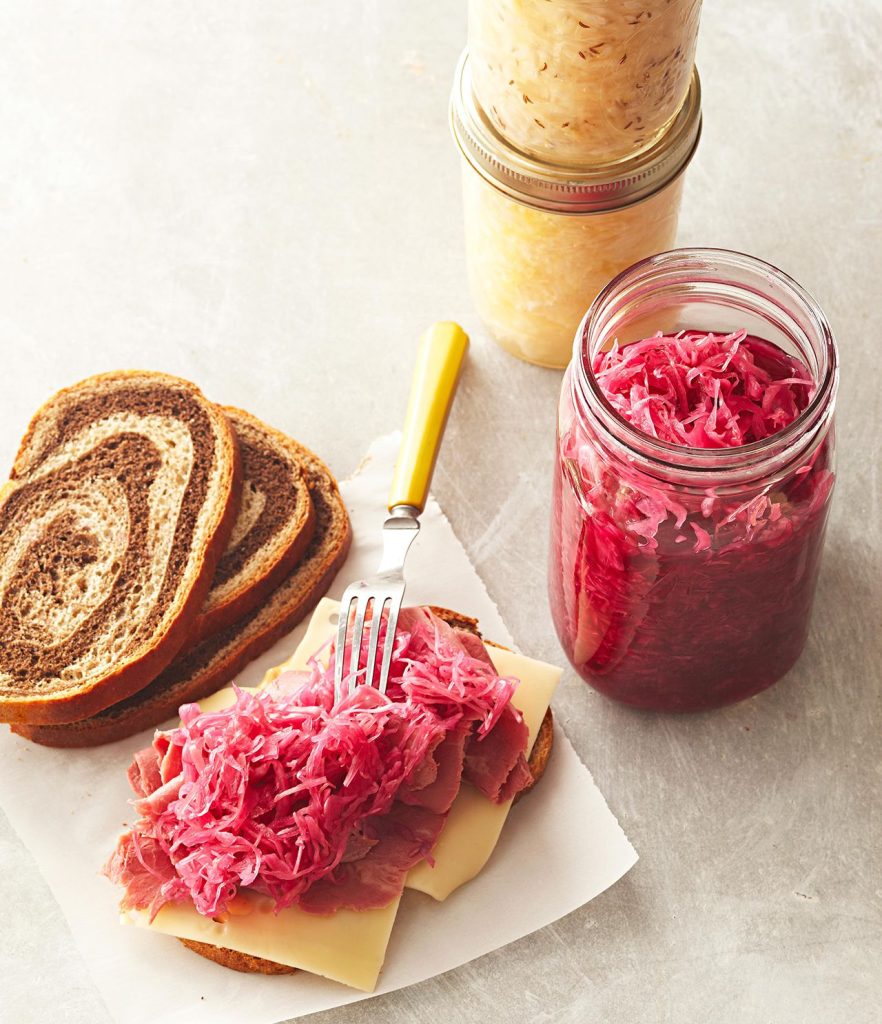
- In a Reuben or on hot dogs (German-American classic)
- Warm it gently with onions and a splash of apple juice for a mellow, sweet-tangy vibe
- Stir into potato salad for brightness and crunch
Pro tip: If you want some of the live-culture benefits, add a spoonful to your plate after cooking, or keep part of it raw for topping.
German-Style Variations (Still Traditional, Just Slightly Fancy)
Caraway Kraut
Add 1 to 2 teaspoons caraway seeds. This is the “tastes like a Bavarian deli” option.
Juniper-Bay Kraut
Add lightly crushed juniper berries and a bay leaf for a subtle, woodsy note that plays great with pork.
Apple-Onion Serving Version (After Fermentation)
Keep the ferment simple. When serving warm, sauté onion, add sliced apple, then fold in kraut and heat gently.
FAQ
Do I need a starter culture?
Nope. Classic sauerkraut relies on naturally occurring lactic acid bacteria on the cabbage. Salt and anaerobic conditions help the “good team” win.
Can I use red cabbage?
You can, but it won’t be classic German white-cabbage kraut. It’s delicious, just differentearthier and sometimes a bit firmer.
Should I use iodized salt?
It’s better to use non-iodized salt without anti-caking agents for best fermentation and cleaner flavor.
How long should I ferment?
The honest answer: until it tastes like you want it to taste. One week is young and lightly tangy; 3 to 4 weeks is classic and fully sour; longer can get deeper and funkier.
Real-World Fermenting Experiences (An Extra of “What It’s Actually Like”)
If you’ve never fermented anything before, homemade sauerkraut can feel weirdly emotional for a jar of cabbage. People often expect one dramatic “before and after” moment, but kraut is more like a slow-burn TV series: small changes each day, occasional cliffhangers, and a finale that tastes better than it has any right to.
One common experience: the first 48 hours are suspiciously quiet. You packed the jar, you did the salt math, you even gave the cabbage a pep talk… and then nothing. This is normal. Fermentation often starts subtle. By day 2 to 4, many batches begin to bubble more noticeably, brine gets cloudy, and the smell shifts from “freshly cut cabbage” to “hey, something’s happening in there.” That’s usually the point where beginners either feel triumphant or start googling “Is my sauerkraut supposed to smell like… sauerkraut?”
Another real-life pattern: the brine level changes. Cabbage compresses, bubbles push up, and what looked perfectly submerged can suddenly look a little exposed. Home fermenters quickly learn that the true secret skill is not shredding cabbageit’s keeping cabbage under brine without turning your kitchen into a brine-themed water park. Using a weight (and a tray underneath) is the difference between “easy hobby” and “why is my counter sticky again?”
Then there’s the “surface stuff” phase. Many people eventually see a thin white film or yeast on top. It can look alarming, but it’s often manageable with skimming and better submersion. The experience here is less about panic and more about routine: skim, wipe the rim, re-weight, move on. You’ll also learn the difference between normal fermentation aromas (tangy, cabbage-y, pleasantly sour) and the kind of smell that makes you recoil. That “nose check” becomes your best friend.
Taste is where the magic happens. In week one, kraut can taste like salty coleslaw that’s trying its best. In week two, it becomes brighter and more balanced. By week three or four, many batches hit that classic German profileclean sourness, crisp bite, and a flavor that makes fatty foods feel instantly lighter. People who “didn’t like sauerkraut” often discover they didn’t like canned sauerkraut. Fresh, home-fermented kraut is a different creature.
Finally, expect your preferences to evolve. Some folks love a shorter ferment for extra crunch; others want a longer ferment for deeper tang. Many home fermenters end up keeping notes like:
- “Loved it at 18 daysperfect tang.”
- “Too warm near the ovensoft by week 3.”
- “Caraway = yes. Juniper = also yes.”
- “Next time: shred thinner for better texture.”
The best “experience lesson” is simple: sauerkraut rewards attention, not perfection. If you can keep it submerged, use the right salt, and give it time, you’ll almost always end up with a jar of crunchy, tangy German-style goodness that makes your fridge feel like it has a passport.
Conclusion
Homemade German sauerkraut is one of the simplest traditional foods you can makejust cabbage, salt, and patienceyet it delivers big flavor and serious kitchen pride. Weigh your salt, keep the cabbage under brine, ferment at a steady temperature, and taste as you go. In a few weeks, you’ll have kraut that’s brighter, crunchier, and far more interesting than anything that’s been shelf-sitting since last summer.
