
How to Play Hot Potato: Rules, Variations, & More
Th5
Hot Potato is one of those classic party games that proves fun does not need a charging cable, a complicated rulebook, or a dramatic background story involving dragons and lost kingdoms. All you need is a group of players, one safe object to pass around, and music that can stop at any moment. That tiny pause in the music? That is where the magic happens. Suddenly, a beanbag becomes the most suspicious object in the room.
Whether you are planning a birthday party, classroom activity, youth group game, family night, summer camp session, or rainy-day indoor activity, learning how to play Hot Potato gives you a quick, flexible game that works for many ages. It is easy for young kids to understand, simple for adults to organize, and surprisingly adaptable for older children, teens, and even grown-ups who claim they are “just watching” before becoming wildly competitive in round two.
What Is Hot Potato?
Hot Potato is a fast-paced circle game where players pass an object while music plays. When the music stops, the player holding the object is either out, earns a penalty point, performs a silly challenge, or completes a task depending on the version being played. The goal is simple: do not be the person holding the “hot potato” when the music stops.
The “potato” does not have to be an actual potato. In fact, please do not use a hot real potato unless your party theme is “Questionable Decisions.” A soft ball, beanbag, plush toy, rolled-up sock, foam object, or themed party prop works much better. The object should be safe to pass quickly and easy for players to hold.
What You Need to Play Hot Potato
One reason Hot Potato is so popular is that setup takes less time than finding the matching lid for a food container. You only need a few basic items:
- A soft object to use as the potato
- A music player, phone, speaker, timer, or person who can start and stop music
- A group of players, ideally four or more
- Enough open space for players to sit or stand in a circle
- Optional: small prizes, challenge cards, or score sheets
For younger children, choose a lightweight object that will not hurt if dropped. For older players, you can use a slightly trickier item, such as a soft foam ball or a funny themed prop. If you are playing at a birthday party, match the object to the theme: a plush dinosaur for a dinosaur party, a mini pumpkin for Halloween, or a wrapped gift for a holiday version.
Basic Hot Potato Rules
The basic rules of Hot Potato are easy enough for children to learn quickly, but clear instructions help prevent chaos. And by chaos, we mean three kids passing in different directions while someone yells, “I thought we were rolling it!”
Step 1: Form a Circle
Have all players sit or stand in a circle facing one another. Sitting works well for younger kids, classrooms, and smaller spaces. Standing adds more movement and energy, which is great for parties or physical education activities.
Step 2: Choose the Potato
Select one safe object to pass. Explain that players should pass it quickly but carefully. The goal is speed, not launching it like a tiny moon.
Step 3: Start the Music
When the music begins, players pass the potato around the circle. Most versions use one direction, such as clockwise, but you can switch directions between rounds to keep everyone alert.
Step 4: Stop the Music Randomly
The music leader stops the music at an unpredictable time. The player holding the potato when the music stops is affected by the round’s rule. In the classic version, that player is out.
Step 5: Continue Until One Player Remains
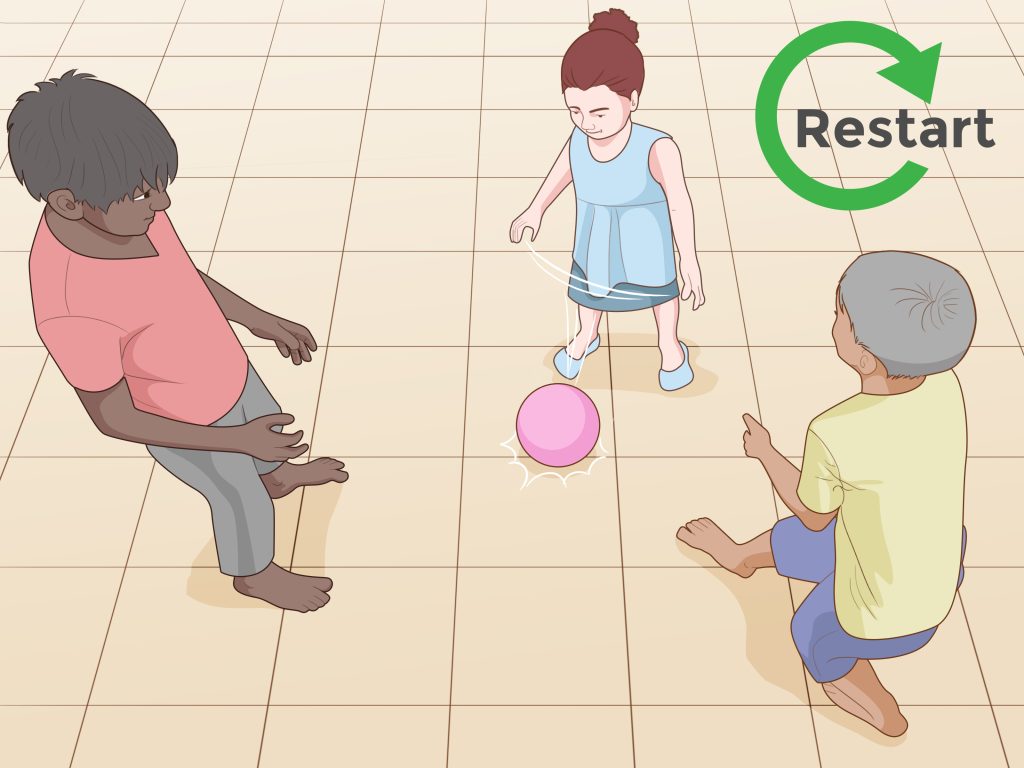
Restart the music and keep playing. The game continues until only one player remains, and that player is the winner.
Classic Elimination Version
The classic version of Hot Potato is elimination-based. When the music stops, the player holding the potato leaves the circle. The circle gets smaller, the tension gets bigger, and the potato starts feeling like it has a personal grudge against everyone.
This version is best for older children, short party games, and groups that enjoy competition. However, for younger kids, elimination can sometimes lead to boredom or hurt feelings. If players are out early, give them a helper role, such as music assistant, referee, cheerleader, or silly dance judge. That way, nobody feels like they have been exiled to the Land of Folding Chairs.
Non-Elimination Hot Potato Rules
For classrooms, preschool groups, family games, or mixed-age events, a non-elimination version is often better. Instead of leaving the game, the player holding the potato when the music stops completes a fun action and then returns to play.
Good non-elimination actions include:
- Do five jumping jacks
- Tell a joke
- Name an animal that starts with a certain letter
- Spin around once
- Answer a review question
- Make a silly face
- Choose the next direction of passing
This version keeps everyone involved and turns the game into a playful learning or movement activity. It also works beautifully when the goal is fun, teamwork, or classroom engagement rather than finding one final champion.
Best Hot Potato Variations
Once players understand the basic rules, variations make Hot Potato feel fresh again. The game is flexible, so you can adjust it for age, space, theme, season, or learning goal.
1. Musical Hot Potato
This is the standard version. Players pass the potato while music plays. When the music stops, the player holding it is out, earns a point, or does a challenge. Use upbeat music for high energy or softer music for younger children.
2. Reverse Direction Hot Potato
After each round, switch the direction of passing. Clockwise becomes counterclockwise. This small change keeps players focused and prevents the game from becoming automatic.
3. Two-Potato Hot Potato
Add a second potato for a bigger challenge. Players must pay attention to two objects moving around the circle. This version is best for older kids or larger groups because it increases speed, laughter, and the chance of dramatic confusion.
4. Challenge Card Hot Potato
Write simple challenges on cards and place them in a bowl. When the music stops, the player holding the potato draws a card and completes the task. This is excellent for parties, classrooms, and team-building activities.
5. Learning Hot Potato
Teachers can turn Hot Potato into a review game. When the music stops, the player holding the object answers a math question, defines a vocabulary word, names a historical fact, or solves a quick problem. It adds movement to learning without requiring a giant worksheet that makes everyone sigh in lowercase.
6. Water Balloon Hot Potato
This outdoor summer version uses a water balloon as the potato. Players pass it carefully until the music stops or until it pops. Use this version outside only, unless you enjoy explaining puddles to your carpet.
7. Pass the Present
Wrap a small prize in multiple layers of wrapping paper. Players pass the present while music plays. When the music stops, the player holding it removes one layer. The game continues until the final layer is opened. This version is especially fun for birthdays and holiday parties.
8. Fitness Hot Potato
When the music stops, the player holding the potato chooses a quick movement for everyone to do: jumping jacks, toe touches, arm circles, or marching in place. This version turns the game into an active movement break.
9. Silent Hot Potato
Players must pass the potato without talking. Anyone who laughs, speaks, or makes a sound completes a silly action. This version is harder than it sounds, especially when someone makes intense eye contact with a stuffed avocado.
10. Team Hot Potato
Divide players into two or more circles. Each team has its own potato. When the music stops, the team with the potato holder gets a point against them. The team with the lowest score after several rounds wins.
Hot Potato Safety Tips
Hot Potato is simple, but a few safety rules make it smoother. Use a soft object, especially with younger players. Keep the passing motion controlled. No hard throwing, no aiming at faces, and no diving across the room like an action movie hero trying to save a sandwich.
Make sure the play area is clear of bags, furniture corners, slippery rugs, or anything that could cause tripping. If players are standing, remind them to keep their feet planted unless the variation includes movement. For very young children, sitting in a circle is usually safest.
Also, choose music volume carefully. Loud music may feel exciting, but players still need to hear instructions. If the group is large, use a clear signal such as raising a hand, clapping, or saying “freeze” when the round stops.
How Many People Can Play Hot Potato?
Hot Potato works with small and large groups. Four to eight players is ideal for a quick family game. Ten to twenty players works well for classrooms, parties, and camps. For very large groups, divide everyone into smaller circles so players do not have to wait too long between passes.
With younger kids, smaller groups are easier to manage. With older kids, larger circles can make the game more exciting, especially if you add two potatoes or challenge cards.
Best Ages for Hot Potato
Children as young as preschool age can play a simple version of Hot Potato with adult guidance. For ages three to five, keep the rules gentle, use a soft object, and avoid elimination if possible. For elementary-aged kids, classic rules and silly challenges work well. Older kids may enjoy harder variations, team play, speed rounds, or trivia-based versions.
Adults can play too. In fact, adults often pretend they are too mature for Hot Potato, then immediately panic-pass the beanbag like it contains tax paperwork.
Why Hot Potato Is Good for Kids
Hot Potato is more than a party filler. It helps children practice listening, timing, focus, self-control, turn-taking, and quick decision-making. When used as a classroom game, it can reinforce memory and attention. When used as a movement game, it encourages active play and coordination.
The game also builds social skills. Players must follow shared rules, handle suspense, respond to winning and losing, and stay engaged with the group. In non-elimination versions, children also learn that games can be fun without someone always being removed from play.
Common Mistakes to Avoid
The first mistake is using an object that is too hard, too heavy, or too tempting to throw across the room. Keep it soft and simple. The second mistake is stopping the music in a predictable pattern. If the music always stops after ten seconds, players will figure it out faster than adults find hidden birthday cake.
Another common issue is letting eliminated players sit with nothing to do. Give them a role so they remain part of the fun. Finally, avoid overly complicated rules for young players. Hot Potato works best when everyone understands what to do within the first minute.
Hot Potato for Classrooms
In classrooms, Hot Potato can be used as a quick review game, brain break, or social-emotional learning activity. For example, students can pass a soft ball while music plays. When the music stops, the student holding the ball answers a question, shares a strategy, names something they learned, or completes a movement pattern.
Teachers can adapt the game for spelling, math facts, vocabulary, science review, foreign language practice, or discussion prompts. The key is keeping questions short and supportive. The game should feel energizing, not like a pop quiz wearing a party hat.
Hot Potato for Birthday Parties
For birthday parties, Hot Potato is a reliable choice because it requires almost no setup and works indoors or outdoors. Use a themed object to match the party. At a pirate party, pass a treasure pouch. At a space party, pass a plush planet. At a princess party, pass a soft crown. At a sports party, pass a foam ball.
To make the game more party-friendly, use non-elimination rules or give small prizes for funny challenges. You can also let the birthday child choose the music for the first round or decide the silly task for the next round.
My Experience Playing and Organizing Hot Potato
Hot Potato has a special kind of charm because it creates excitement without needing much preparation. From my experience observing and organizing group games, the best rounds are usually the ones where the rules are clear, the object is silly, and the music stops at truly unexpected moments. Players love suspense, but they love fair suspense even more.
One helpful trick is to choose a music leader who cannot see the circle. If the person stopping the music watches the players, even accidentally, kids may think the game is unfair. Turning around or facing away keeps the timing random and prevents the classic complaint: “You stopped it on me on purpose!” That sentence has probably appeared in every Hot Potato game since the invention of circles.
Another experience-based tip is to match the pace to the group. Younger kids often need a slower first round so they can understand the passing pattern. Once they get comfortable, speed naturally increases. Older kids usually enjoy faster rounds right away, especially if the potato changes direction or if two objects are moving at once.
Non-elimination versions tend to work best when the group includes shy children or mixed ages. Instead of making a player sit out, ask them to do something playful and quick. For example, they might name their favorite food, do three claps, choose the next song, or give the potato a dramatic farewell speech before passing it again. These small moments make the game fun without putting too much pressure on anyone.
For classroom use, Hot Potato works especially well when paired with short questions. Long questions slow the game down. Quick prompts keep the energy moving. Examples include “Name a noun,” “What is seven times six?” “Say one kind thing,” or “Name a state.” Students stay alert because they know the music could stop at any time.
For parties, themed objects make a surprisingly big difference. A plain beanbag works, but a plush shark, tiny pillow, or wrapped mystery box makes players laugh before the game even starts. The object becomes part of the story. Suddenly, they are not passing a beanbag; they are passing “the royal pickle,” “the moon rock,” or “the suspicious birthday burrito.” That tiny bit of imagination makes the game more memorable.
The most successful Hot Potato games also have a clear ending. Children like knowing whether they are playing until one winner remains, until everyone has had a turn, or for a set number of songs. Without an ending, the game can stretch until the adults slowly lose hope. A good structure might be five rounds, three songs, or one final championship round.
Finally, Hot Potato is best when adults treat it as lighthearted fun rather than serious competition. The point is laughter, movement, attention, and shared excitement. If a child drops the potato, pauses too long, or passes the wrong direction, keep the tone friendly. A quick reset is better than a long lecture. After all, the potato may be hot, but the mood should stay cool.
Conclusion
Hot Potato remains a favorite because it is simple, flexible, and instantly exciting. The rules are easy: form a circle, pass a safe object while music plays, and react when the music stops. From there, you can shape the game for almost any group. Use elimination for competitive players, non-elimination challenges for younger kids, learning prompts for classrooms, water balloons for summer, or wrapped gifts for parties.
At its best, Hot Potato is not just about avoiding the object. It is about timing, laughter, focus, and the hilarious moment when everyone suddenly treats a stuffed toy like it is the most dangerous vegetable in history. With a few thoughtful rules and creative variations, this classic game can turn a simple gathering into a fast-moving circle of fun.
