
How to Play Minecraft Bed Wars: A Full Guide for Beginners
Th3
Bed Wars is what happens when Minecraft builds a bridge, PvP sprints across it, and teamwork quietly cries in the background.
It’s fast, chaotic, and incredibly learnableespecially once you stop treating your bed like a decorative throw pillow.
This beginner guide breaks down the core rules, smart early-game habits, simple strategies, and the “why did I just fall into the void” moments
that every new Bed Wars player goes through.
What Is Minecraft Bed Wars?
Bed Wars is a multiplayer minigame (usually played on Minecraft servers like Hypixel and others) where each team has a bed.
As long as your bed is alive, you respawn after dying. When your bed is destroyed, you’re on “final life” modedie again and you’re out.
Your goal is to destroy other teams’ beds and eliminate their players until your team is the last one standing.
The Basic Loop
- Collect resources from your base generator (typically iron and gold).
- Buy blocks and gear at the Item Shop (weapons, armor, tools, TNT, utility).
- Use diamonds and emeralds from map generators for team upgrades and powerful items.
- Attack and defend until all enemy teams are eliminated.
Where to Play Bed Wars (And What to Expect)
You can’t play Bed Wars in vanilla single-player Minecraft without a custom map or server setup.
Most players jump into Bed Wars through large multiplayer servers. The most well-known is Hypixel’s Bed Wars on Java Edition,
but other servers run their own versions with slightly different shops, item costs, and map pacing.
Beginner tip: start with the most popular version on your server of choice and learn the fundamentals first.
Once you understand resource flow, upgrades, and fight timing, switching to other servers feels like changing shoesnot changing legs.
Game Modes Explained (Pick Your Chaos Level)
Bed Wars usually comes in team sizes like Solo (1v1v1v1…), Doubles, 3s, and 4s. The core rules stay the same, but the pace changes:
- Solo: Fast decision-making. You do everything: defend, rush, collect resources, and clean up fights.
- Doubles: Great for beginnerssimple teamwork without a crowd.
- 3s/4s: Roles matter more. You can specialize (defender, diamond runner, mid control, etc.).
- Big-team modes (like 4v4): More brawls, fewer sneaky plays. Expect organized chaos.
The First 60 Seconds: Your “Don’t Lose Instantly” Checklist
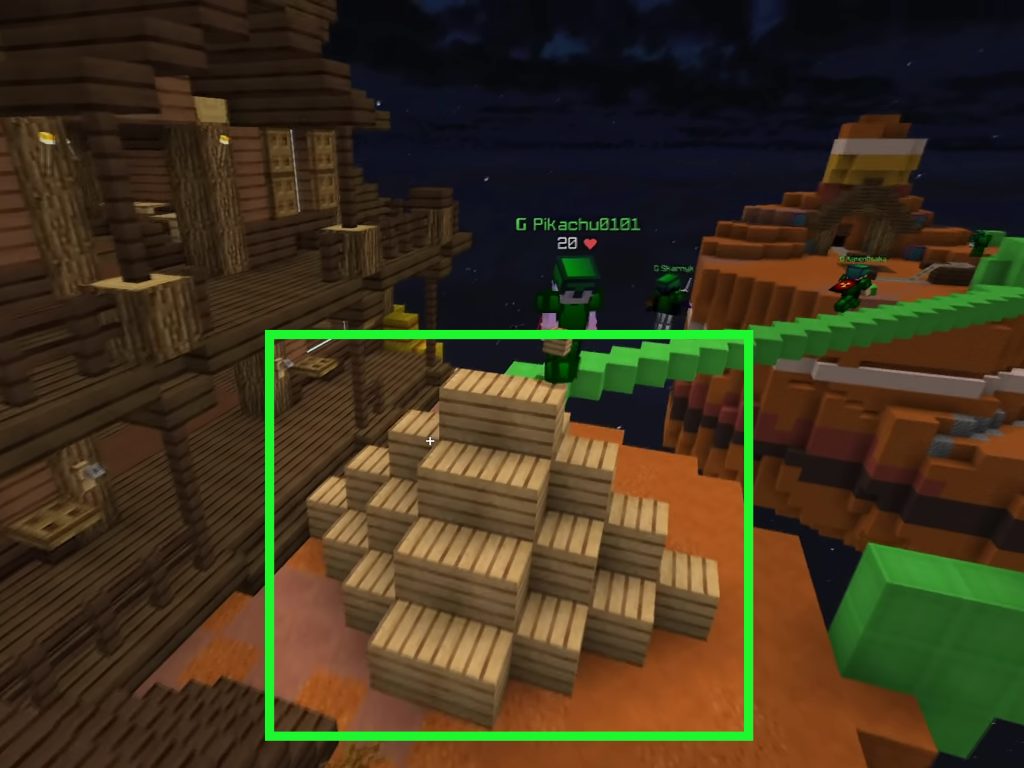
The opening minute is where most new players either build a foundation… or build a one-block bridge and immediately get punted into the void.
Your goal early is simple: get blocks, get a plan, and don’t hand the enemy a free bed.
Simple Starter Routine (Works in Most Modes)
- Grab iron/gold from your generator immediately.
- Buy blocks (usually wool) for bridging and quick defense.
- Start a basic bed defense before running off on a hero quest.
- Decide your first objective: rush your nearest neighbor, go for diamonds, or play safe and upgrade.
Example “Beginner Buy” (Early Game)
- Blocks: enough wool to bridge and patch holes quickly.
- One basic tool: pickaxe or axe if your server’s defenses commonly use stone/wood.
- Optional: TNT if you’re rushing early and expect a quick bed break window.
Bed Defense for Beginners: Protect It, Don’t Worship It
New players often do one of two things:
(1) protect the bed with exactly one piece of wool (brave, but doomed), or
(2) build a concrete fortress that blocks their own exit (impressive, but also doomed).
The sweet spot is a defense that’s fast, layered, and doesn’t trap you inside your own base.
3 Beginner-Friendly Bed Defenses
-
The “Budget Burrito” (Fast & Useful):
A quick layer of wool, then a tougher layer like end stone/wood (depending on your server).
It’s not fancy, but it buys time. -
The “Onion” (Layered Defense):
Multiple layers of different materials so enemies need multiple tools.
Great if you’re playing teams and can afford the time. -
The “Don’t Make It Obvious” Defense:
Slightly tuck the bed or shape the defense to reduce direct TNT angles.
The goal is to make breaking the bed annoying, not impossible.
Pro mindset (in beginner words): your bed defense doesn’t need to be unbreakable.
It needs to force the enemy to spend timeand time is what your team uses to counterattack.
Understanding Resources: Iron, Gold, Diamonds, Emeralds
Bed Wars is basically a shopping simulator with swords. Different resources buy different things:
- Iron & Gold: your core spending money (blocks, tools, basic weapons, utility).
- Diamonds: team upgrades (buffs that help everyone).
- Emeralds: high-power items (top gear, strong utility, and game-ending tools).
What Should You Prioritize?
If you’re learning, prioritize in this general order:
blocks → tools → team upgrades → armor → utility.
The exact “best” order changes by map and mode, but this keeps you functional.
Shops and Upgrades: Spend Smart, Win More
Most Bed Wars servers have two main shops:
an Item Shop for personal gear, and a Team Upgrades shop for upgrades that affect your whole team.
The best beginner habit is to stop buying random stuff “because it looked cool” and start buying what solves your current problem.
Item Shop Priorities (Beginner Edition)
- Blocks: You can’t attack, defend, or escape without them. Running out of blocks mid-fight is a classic tragedy.
- Tools: A pickaxe/axe often breaks beds faster than a “better sword” ever will.
- TNT / Fireballs / Projectiles: Great for opening defenses and interrupting bridges.
- Utility: Invisibility/jump potions, ender pearls, or other server-specific items can create winning plays (save for later if you’re brand new).
Team Upgrades That Help Beginners Immediately
Team upgrades vary by server, but these are common “high impact” categories:
- Forge upgrades: your base generator produces resources faster, which means more blocks and more gear without leaving home.
- Protection / Sharpness equivalents: team-wide combat buffs that make every fight slightly easier.
- Traps: early warning + debuffs that punish sneaky bed breakers.
Beginner rule: if your team has diamonds sitting in a chest while everyone buys solo gadgets, you are volunteering to lose.
Upgrades are how teams snowball.
Roles in Team Modes: Stop Colliding Like Shopping Carts
In Doubles/3s/4s, your team gets better instantly when people choose jobs instead of duplicating the same half-plan.
Here are simple roles that work even with random teammates:
Easy Team Roles
- Anchor (Defender): keeps the bed safe, upgrades forge, and holds base during chaos.
- Rusher: pressures the nearest team early and tries to break beds before defenses become thick.
- Diamond Runner: grabs diamonds consistently and fuels upgrades/traps.
- Mid Player: contests emeralds and prevents enemy teams from becoming fully geared monsters.
If you’re brand new, pick Anchor or Diamond Runner.
You’ll learn the map, the economy, and timingwithout needing perfect PvP right away.
Bridging & Movement: Cross the Void Without Becoming a Clip
Bridging is the skill that makes Bed Wars feel either smooth and strategic… or like a gravity-themed comedy show.
The good news: you don’t need advanced speed bridging to start winning.
You need safe bridging, then you can gradually learn faster methods.
Beginner-Safe Bridging
- Crouch bridging: move carefully while sneaking so you don’t walk off the edge.
- Angle bridging: practice placing blocks behind you at slight angles (helps later with faster bridging).
- Build with “escape exits”: add a small side platform occasionally so you can dodge projectiles instead of eating them.
When You’re Ready: Speed Bridging (Without the Drama)
Many players learn a faster method where you alternate crouching and standing to place blocks quickly while reducing fall risk.
Don’t grind it for hours on day one. Practice five minutes a day and your hands will quietly start cooperating.
A 5-Minute Bridging Drill
- Place a short bridge safely (no rushing, no falling).
- Do it again while slightly increasing speed.
- Practice “panic recovery”: place a block under you if you slip (you’ll thank yourself later).
- End with one attempt at faster bridging, then stop before tilt sets in.
PvP Basics That Matter in Bed Wars
Bed Wars combat is not just “click faster.”
It’s positioning, height, and using blocks during fights to control movement.
You can beat mechanically stronger players by choosing better fights.
Beginner PvP Wins Come From These Habits
- Fight with blocks in hand: place a block to stop an enemy sprint, block their path, or create cover.
- Use height: high ground is real. A one-block height advantage can turn fights into easy combos.
- Don’t chase forever: if you’re chasing, you’re often leaving your bed open or walking into an ambush.
- Reset when needed: back up, eat/heal (if your server allows), and re-engage smartly.
How to Attack (Without Feeding the Enemy Free Kills)
Most beginner attacks fail for one reason: they’re underprepared.
You arrive at an enemy base with six blocks, no tools, and pure optimism.
Optimism is great, but TNT is better.
A Simple Beginner Attack Plan
- Bridge with cover: don’t build a perfectly flat runway that screams “shoot me.”
- Check their defense material: plan tools accordingly (axe for wood, pickaxe for stone-like blocks).
- Create pressure: even if you don’t break the bed, forcing them to defend buys your team time.
- Break the bed fast: tools + TNT + quick block placement wins more than sword duels at their spawn point.
Tools That Break Beds (Literally and Emotionally)
- TNT: great for cracking layered defenses and creating instant chaos.
- Fireballs/projectiles: knock enemies off bridges, break key blocks, open paths.
- Invisibility/jump utility: strong for surprise plays once you understand timing and awareness.
- Ender pearls (if available): fast repositioning for clutch bed breaks or escapes.
Midgame & Endgame: What Changes After the First Beds Fall
Early game is about first bridges and first upgrades.
Midgame is about map control: diamonds, emeralds, and preventing one team from becoming a fully upgraded juggernaut.
Midgame Priorities
- Upgrade consistently: protection, forge, trapsdon’t wait until you’re already losing.
- Control emerald access: teams with consistent emeralds tend to dictate endgame fights.
- Don’t ignore your base: one sneaky player can undo five minutes of “we’re winning” instantly.
If Your Bed Gets Destroyed
You are not “done.” You are simply promoted to Final Life Specialist.
Play tighter, group up more, prioritize armor and utility, and avoid pointless solo duels.
Your new win condition is: survive while other teams eliminate each other, then strike when you have an advantage.
Common Beginner Mistakes (And the Quick Fix)
- Leaving the bed uncovered: always place at least a quick layer before roaming.
- Not buying tools: tools are how you actually break beds fast.
- Hoarding resources and dying: spend or stash in a chestdon’t donate to enemies.
- Building one straight bridge: add slight elevation changes and side steps so you’re harder to knock off.
- Ignoring upgrades: team upgrades are multipliers, not optional decorations.
- Fighting on the edge: if you’re new, take fights on wider areas until you’re comfortable.
A 7-Day Practice Plan (Actually Beginner-Friendly)
Want the fastest improvement without turning Bed Wars into a second job?
Focus on one skill per day, then play a few games to apply it.
- Day 1: Learn shop categories + buy blocks/tools every match.
- Day 2: Build a quick bed defense within the first minute.
- Day 3: Practice safe bridging and “recovery blocks.”
- Day 4: Learn one attack pattern (TNT timing or tool break path).
- Day 5: Run diamonds for upgrades in team modes.
- Day 6: Play for mid control (even briefly) and learn emerald timing.
- Day 7: Review your biggest recurring mistake and fix just that.
Experiences: What Bed Wars Feels Like When You’re New (And Why It’s Addictive)
Let’s talk about the part no tutorial can fully capture: the emotional roller coaster of being a beginner in Bed Wars.
Your first few games often feel like you’re learning three sports at onceparkour, shopping, and getting politely escorted into the void.
One match you’ll spawn, buy blocks, and feel confident… then you’ll look up and realize a neighbor has already built a bridge to your island
like they’re delivering bad news in person.
The first time your bed gets destroyed, it’s genuinely dramatic. You’ll hear the alert, spin around like a cartoon character,
and suddenly every decision becomes louder. Do you rush mid for emeralds? Hide and gear up? Stick with your team?
Beginners often panic and take a fight they didn’t need. But after a few games, something clicks:
final life isn’t a death sentenceit’s a different strategy.
You start moving smarter, taking safer routes, and choosing fights where you have space to back up instead of falling off a bridge.
Then there’s the moment you “get” the economy. At first, diamonds and emeralds feel like side quests.
Later you realize they’re the steering wheel. A team with steady upgrades feels like they’re playing with invisible training weights removed:
they hit harder, last longer, and recover faster. As a beginner, the first time you buy a tool and break a bed in seconds
(instead of hacking at defenses with a sword like you’re chopping a tree) is a mini-awakening.
You also learn the weird social life of Bed Wars. In team modes, you’ll meet the silent MVP who upgrades everything and never types a word.
You’ll also meet the teammate who rushes mid immediately, returns with emeralds, and somehow still forgets the bed exists.
If you queue with friends, the experience changes completely: even basic callouts like “I’m getting diamonds” or “they’re invis” feel powerful.
If you’re solo-queuing, you learn to make your playstyle readable: defend early, drop resources in the chest,
and move with a purpose so random teammates can “join the plan” without a meeting invite.
The best beginner experiences usually come from small wins, not perfect victories.
A clutch block placement that saves you from falling. A bridge you finish without crouching the whole way.
A trap that reveals an invisible player and turns a guaranteed bed loss into a clean defense.
Bed Wars rewards these micro-improvements fast, which is why it stays fun even when you’re still learning.
Eventually you’ll rewatch your early habits and wonder how you ever thought eight blocks was “plenty.”
That’s progress. Also: buy more blocks.
Conclusion
Bed Wars is less about being the best fighter and more about being the best problem-solver under pressure.
Learn the early routine, build a quick defense, spend resources wisely, and practice bridging a little each day.
Once you understand upgrades and timing, your wins won’t feel like luckthey’ll feel like you planned them.
