
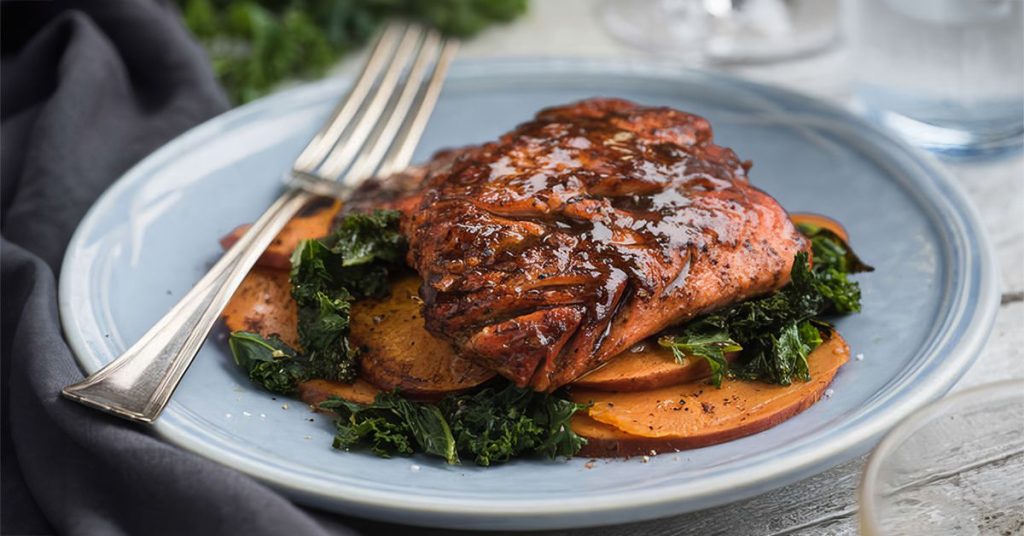
Coconut Sweet Potatoes with Creamy Kale and Salmon
Th5
Note: This publication-ready article is written in original American English and synthesizes real cooking, nutrition, and food-safety guidance without adding source links or unnecessary citation placeholders.
A Cozy, Colorful Dinner That Tastes Like You Tried Harder Than You Did
Coconut sweet potatoes with creamy kale and salmon is the kind of dinner that makes a weeknight feel suspiciously put-together. It has roasted sweet potatoes that turn caramelized at the edges, tender salmon with a savory glaze, and a silky coconut-kale sauce that tastes like comfort food took a vacation somewhere sunny. The whole plate is rich, bright, satisfying, and balanced without acting like a “healthy dinner” that forgot to bring flavor to the party.
This dish works because every ingredient has a job. Sweet potatoes bring natural sweetness, fiber, and that beautiful orange color that practically shouts, “I contain good stuff.” Kale adds earthy depth and a hearty texture that stands up well to coconut milk. Salmon delivers high-quality protein and omega-3 fats, while lime, mustard, garlic, ginger, and chili keep the richness lively instead of heavy. It is a one-bowl kind of meal, but it feels restaurant-adjacent in the best possible way.
If you are searching for a salmon sweet potato dinner that is easy enough for meal prep but impressive enough for guests, this recipe has range. It can be served as a composed plate, spooned into a shallow bowl, or packed into lunch containers for a next-day meal that will make sad desk salads question their life choices.
Why Coconut, Sweet Potatoes, Kale, and Salmon Work So Well Together
The magic of coconut sweet potatoes with creamy kale and salmon is contrast. Sweet potatoes become soft and candy-like when roasted, but a little chili powder, smoked paprika, or cayenne keeps them from tasting like dessert. Coconut milk brings creaminess without needing heavy cream, and it has a mellow sweetness that pairs naturally with both greens and orange vegetables.
Kale, especially curly kale or lacinato kale, has enough structure to handle simmering in coconut milk. Instead of collapsing into a watery green situation, it softens into something velvety, savory, and spoonable. Garlic and onion give the sauce a deeper base, while lemon or lime juice cuts through the richness. Think of acidity as the tiny dinner bell that wakes everything up.
Then there is salmon. Rich, buttery, and fast-cooking, salmon sits beautifully on top of the creamy greens and roasted sweet potatoes. Its natural fattiness pairs well with coconut, but it also benefits from bold seasonings like Dijon mustard, ginger, chili flakes, black pepper, and citrus zest. The result is a healthy salmon dinner that does not taste like a compromise. It tastes like someone actually cared about dinner.
Ingredient Breakdown: What You Need and Why It Matters
Sweet Potatoes
Choose medium sweet potatoes with firm skin and no soft spots. Orange-fleshed sweet potatoes are ideal because they roast beautifully and develop a creamy interior. Cut them into cubes for faster cooking or split them lengthwise for a more dramatic stuffed-sweet-potato presentation. Roasting at a moderately high temperature helps the natural sugars caramelize, creating browned edges and a soft center.
Salmon
Use skin-on or skinless salmon fillets, depending on your preference. Skin-on salmon is helpful if you want crisp texture and extra protection against overcooking. Center-cut fillets cook more evenly, but tail-end pieces are perfectly fine if you watch them closely. Fresh salmon should smell clean and mild, not overly fishy. Frozen salmon works too; just thaw it safely in the refrigerator and pat it very dry before cooking.
Kale
Curly kale has a bouncy texture and holds sauce well, while lacinato kale, sometimes called Tuscan kale or dinosaur kale, is a little softer and more elegant. Remove the tough stems, chop the leaves, and rinse thoroughly. If the kale seems especially sturdy, massage it briefly with a pinch of salt before cooking. Yes, you are giving kale a spa treatment. No, it will not send a thank-you note.
Coconut Milk
Lite coconut milk keeps the dish lighter while still giving the kale a creamy finish. Full-fat coconut milk creates a richer sauce and a more luxurious texture. Avoid sweetened coconut cream, which can make the dish taste like it wandered away from a dessert table. Shake the can before opening, or stir it well if the cream has separated.
Flavor Builders
Garlic, onion, ginger, lime juice, Dijon mustard, chili powder, smoked paprika, and a touch of honey or maple syrup bring balance. The goal is not to make the dish spicy-hot unless you want that. The goal is to create layers: sweet, savory, creamy, tangy, and gently warm.
Coconut Sweet Potatoes with Creamy Kale and Salmon Recipe
Recipe Overview
Prep time: 15 minutes
Cook time: 30 to 40 minutes
Total time: 45 to 55 minutes
Servings: 4
Ingredients
- 4 medium sweet potatoes, scrubbed and cut into 1-inch cubes
- 2 tablespoons olive oil, divided
- 1 teaspoon chili powder
- 1/2 teaspoon smoked paprika
- 1/2 teaspoon kosher salt, plus more to taste
- 1/4 teaspoon black pepper
- 4 salmon fillets, about 5 to 6 ounces each
- 1 tablespoon Dijon mustard
- 1 tablespoon honey or maple syrup
- 1 tablespoon lime juice, plus wedges for serving
- 2 cloves garlic, minced
- 1 small yellow onion, thinly sliced
- 1 tablespoon grated fresh ginger
- 8 cups chopped kale, stems removed
- 1 1/2 cups lite or full-fat coconut milk
- 1/4 teaspoon red pepper flakes, optional
- Fresh cilantro or parsley, for garnish
- Toasted coconut flakes or chopped peanuts, optional for topping
Step 1: Roast the Sweet Potatoes
Preheat the oven to 425°F. Line a large baking sheet with parchment paper. Toss the sweet potato cubes with 1 tablespoon olive oil, chili powder, smoked paprika, salt, and black pepper. Spread them in a single layer, giving the pieces room to brown instead of steam. Roast for 25 to 35 minutes, flipping halfway through, until tender and caramelized around the edges.
Step 2: Season the Salmon
In a small bowl, stir together Dijon mustard, honey or maple syrup, lime juice, and one minced garlic clove. Pat the salmon dry with paper towels, then brush the glaze over the top. Season lightly with salt and pepper. If your salmon has skin, keep the skin side down when baking or searing.
Step 3: Cook the Salmon
During the last 10 to 14 minutes of roasting the sweet potatoes, place the salmon on a separate lined baking sheet and bake until it flakes easily with a fork. For food safety, fish should reach an internal temperature of 145°F. If you prefer extra moisture, remove it from the oven as soon as it is just opaque and flakes gently, then let carryover heat finish the job. The main rule is simple: do not cook salmon until it looks like it has given up on life.
Step 4: Make the Creamy Coconut Kale
While the salmon cooks, warm the remaining 1 tablespoon olive oil in a large skillet over medium heat. Add the onion and cook for 4 to 5 minutes, until softened. Stir in the remaining garlic, ginger, and red pepper flakes. Cook for 30 seconds, just until fragrant. Add the chopped kale in batches, stirring as it wilts. Pour in the coconut milk and simmer for 5 to 8 minutes, until the kale is tender and the sauce thickens slightly. Season with salt, pepper, and an extra squeeze of lime juice.
Step 5: Assemble and Serve
Spoon the creamy kale into shallow bowls or onto plates. Add roasted coconut sweet potatoes, then top with the glazed salmon. Finish with fresh herbs, lime wedges, and toasted coconut flakes or chopped peanuts if you want crunch. Serve warm, preferably before anyone in the house starts asking whether cereal counts as dinner.
Nutrition Highlights Without Turning Dinner Into Homework
This coconut sweet potatoes with creamy kale and salmon recipe earns its place in a balanced meal rotation because it covers several nutritional bases. Salmon is a source of complete protein and provides marine omega-3 fats, especially EPA and DHA. These fats are associated with heart-supportive eating patterns, and many health organizations recommend eating fish, especially fatty fish, about twice per week.
Sweet potatoes contribute complex carbohydrates, fiber, potassium, and beta carotene, the plant pigment responsible for their bright orange color. They are filling, naturally sweet, and friendly to both savory spices and creamy sauces. Kale brings fiber, vitamin K, vitamin C, and a sturdy green texture that holds up better than more delicate leaves.
Coconut milk adds saturated fat, so the amount matters. Lite coconut milk is a good choice if you want a creamy sauce with less richness. Full-fat coconut milk is delicious, but a smaller portion can go a long way. The best version of this dish is not about labeling foods as “good” or “bad.” It is about building a plate that tastes good, feels satisfying, and includes protein, vegetables, healthy fats, and energizing carbohydrates.
Cooking Tips for Better Texture and Flavor
Dry the Salmon Before Cooking
Moisture is the enemy of browning. Before adding glaze or seasoning, pat the salmon dry. This helps the surface cook more evenly and prevents a soggy texture. If you are pan-searing skin-on salmon, dry skin is especially important for crispness.
Do Not Crowd the Sweet Potatoes
Sweet potatoes need space. If the baking sheet is crowded, they steam instead of roast. Use two pans if needed. The difference between roasted sweet potatoes and steamed sweet potato cubes is the difference between applause and polite chewing.
Balance the Coconut Sauce with Acid
Coconut milk is creamy and slightly sweet, which is wonderful, but it needs acidity to stay lively. Lime juice is ideal. Lemon juice also works. Add it at the end so the flavor stays bright.
Season in Layers
Salt the sweet potatoes, season the salmon, and taste the kale sauce before serving. One final pinch of salt or squeeze of lime can make the entire dish pop. Underseasoned kale is not a personality trait anyone needs to develop.
Easy Variations for Different Diets and Moods
Make It Spicier
Add sliced Fresno chili, jalapeño, or extra red pepper flakes to the coconut kale. A spoonful of chili crisp on top also works beautifully, especially if you like heat and crunch.
Make It Dairy-Free and Gluten-Free
The recipe is naturally dairy-free when made with coconut milk and contains no gluten-based ingredients. Always check labels on mustard, spice blends, and packaged toppings if you are cooking for someone with strict dietary needs.
Make It Budget-Friendly
Use frozen salmon fillets, canned salmon cakes, or even roasted chickpeas when salmon is expensive. The coconut sweet potatoes and creamy kale are flexible enough to support different proteins.
Make It Meal Prep Friendly
Roast the sweet potatoes and cook the kale sauce ahead of time. Store the salmon separately so it does not overcook during reheating. When ready to eat, warm the sweet potatoes and kale gently, then add the salmon near the end.
What to Serve with Coconut Sweet Potatoes, Creamy Kale, and Salmon
This dish can stand alone, but it also welcomes simple sides. Brown rice, jasmine rice, quinoa, or farro can stretch the meal and soak up the coconut sauce. A crisp cucumber salad with lime and herbs adds freshness. If you want more vegetables, roasted broccoli, asparagus, or green beans fit right in.
For a dinner-party version, serve the salmon over a wide platter of creamy kale, scatter the roasted sweet potatoes around the edges, and finish with herbs, toasted coconut, and lime wedges. It looks generous and colorful without requiring tweezers, foam, or any other restaurant behavior that makes home cooks nervous.
Storage and Reheating
Store leftovers in airtight containers in the refrigerator for up to 3 days. For best texture, keep the salmon separate from the kale and sweet potatoes. Reheat the kale and sweet potatoes in a skillet over medium-low heat or in the microwave until warm. Add a splash of water or coconut milk if the sauce thickens too much.
Reheat salmon gently. High heat can dry it out quickly, and nobody wants salmon that tastes like a seafood-flavored eraser. Use short microwave intervals at lower power, or warm it in a covered skillet with a teaspoon of water. Leftover salmon is also excellent served cold over the creamy kale and sweet potatoes as a next-day lunch bowl.
Common Mistakes to Avoid
Using Sweetened Coconut Milk
Sweetened coconut milk or cream of coconut belongs in desserts and tropical drinks, not this savory dinner. Use canned unsweetened coconut milk for the best flavor.
Skipping the Lime
Without lime or lemon, the dish can taste too rich. Acid gives the coconut sauce energy and keeps the salmon from feeling heavy.
Overcooking the Salmon
Salmon cooks quickly. Check early, especially if your fillets are thin. When it flakes easily and looks moist inside, it is ready.
Not Removing Kale Stems
Kale stems are tough and fibrous. Remove them unless you enjoy chewing something that feels like a vegetable shoelace.
Experience Notes: What This Dish Feels Like in a Real Kitchen
The first time you make coconut sweet potatoes with creamy kale and salmon, the process may look like three separate tasks: roast the potatoes, cook the fish, simmer the greens. But after one round, it becomes clear that the timing is surprisingly friendly. The sweet potatoes go into the oven first, which gives you plenty of time to season the salmon and chop the kale. By the time the kitchen starts smelling like smoky paprika and caramelized edges, the salmon is ready to join the party.
One of the best things about this recipe is how forgiving it is. If the sweet potatoes roast a little longer, they get sweeter and more browned. If the kale simmers an extra minute, it becomes softer and more luxurious. If the coconut sauce thickens too much, a splash of water loosens it right back up. The only ingredient that demands real attention is the salmon, and even that only asks for a little respect: dry it well, season it generously, and do not abandon it in the oven like a forgotten email draft.
The flavor is also more interesting than the ingredient list suggests. The coconut milk rounds out the bitterness of the kale, while the lime cuts through the richness. The sweet potatoes add a roasted, almost nutty sweetness. The salmon brings savoriness and body. When you get a bite with all three components, it tastes complete: creamy, sweet, tangy, tender, and just a little spicy if you added chili flakes.
This is the kind of dinner that works especially well when you are tired but still want something that feels nourishing. It does not require fancy knife skills, special equipment, or a pantry full of ingredients with names that sound like indie bands. A sheet pan, a skillet, a cutting board, and a decent spatula will do the job. It also gives you that rare cooking reward: leftovers you actually want to eat.
For meal prep, the experience gets even better. Roast extra sweet potatoes and make a larger batch of coconut kale. The next day, you can turn them into a lunch bowl with leftover salmon, a soft-boiled egg, chickpeas, or avocado. Add a squeeze of lime right before eating and the whole dish wakes back up. If you are packing lunch, keep any crunchy toppings separate so they do not become sad and damp.
Another practical lesson: this recipe adapts well to the mood of the season. In cooler months, use full-fat coconut milk, extra ginger, and a pinch of cinnamon or curry powder for a warmer profile. In spring or summer, use lite coconut milk, more lime juice, fresh cilantro, and cucumber salad on the side. The base stays the same, but the personality changes. It is basically the dinner version of a good jacket: reliable, flattering, and surprisingly versatile.
If you are cooking for people who claim they do not like kale, creamy coconut kale is one of the better negotiation tactics. The coconut milk softens the edges, garlic makes it savory, and lime keeps it fresh. Chop the kale smaller for beginners, and let it simmer until tender. Nobody needs to know they are eating a large pile of greens unless they ask. And if they do ask, say it confidently. Confidence is half of cooking; the other half is salt.
In the end, coconut sweet potatoes with creamy kale and salmon is not just a recipe. It is a useful dinner formula: roasted vegetable plus creamy greens plus flavorful protein. Once you understand that structure, you can repeat it in endless ways. Swap sweet potatoes for squash, kale for spinach or chard, salmon for trout or tofu, and lime for lemon. The plate will still make sense, and dinner will still feel like you had a plan all along.
Conclusion
Coconut sweet potatoes with creamy kale and salmon is a balanced, colorful, and deeply satisfying meal that brings together comfort and freshness in one bowl. The sweet potatoes roast until tender and caramelized, the kale becomes rich and silky in coconut milk, and the salmon adds protein, flavor, and a buttery texture that ties everything together. It is easy enough for a weeknight, flexible enough for meal prep, and special enough to serve when you want dinner to look like more effort than it actually required.
With smart seasoning, a little acidity, and careful salmon cooking, this dish becomes more than a healthy salmon recipe. It becomes a repeatable dinner strategy: bold vegetables, creamy sauce, nourishing protein, and bright finishing touches. That is the kind of recipe worth keeping close.
SEO Tags
