
How to Clean a Fog Machine: 13 Steps
Th5
A fog machine is a little bit like a magician’s assistant: when it works, everyone notices the atmosphere; when it fails, everyone notices the awkward silence. Whether you use one for Halloween, school theater, church productions, DJ gigs, haunted houses, photography, cosplay, or backyard parties, regular cleaning keeps the machine from coughing, spitting, smelling burnt, or producing a sad little puff that looks more like a nervous kettle than stage fog.
The good news is that cleaning a fog machine is not complicated. Most water-based fog machines rely on a pump, tubing, a tank, a heater block, and a nozzle. Fog fluid travels through the system, heats up, and exits as vapor that turns into fog when it meets cooler air. Over time, leftover fog fluid can thicken, minerals can build up if the wrong water is used, and residue can collect inside the heater and nozzle. That is why a simple maintenance routine can save you from replacing partsor worse, buying a new machine right before the big event.
This guide explains how to clean a fog machine in 13 practical steps, including what supplies to use, what to avoid, how to flush the system, and how to store the unit so it is ready for the next fog-filled entrance.
Before You Start: Know What Kind of Fog Machine You Have
Most consumer and stage fog machines are water-based, meaning they use fog fluid made from water mixed with glycol or glycerin-based ingredients. These machines are the focus of this guide. Low-lying fog machines, hazers, ultrasonic units, oil-based hazers, and professional atmospheric effects machines may have different cleaning needs, so your owner’s manual always gets the final vote. If your manual says to use a specific brand of fog machine cleaner, follow that advice instead of freelancing like a mad scientist in a cape.
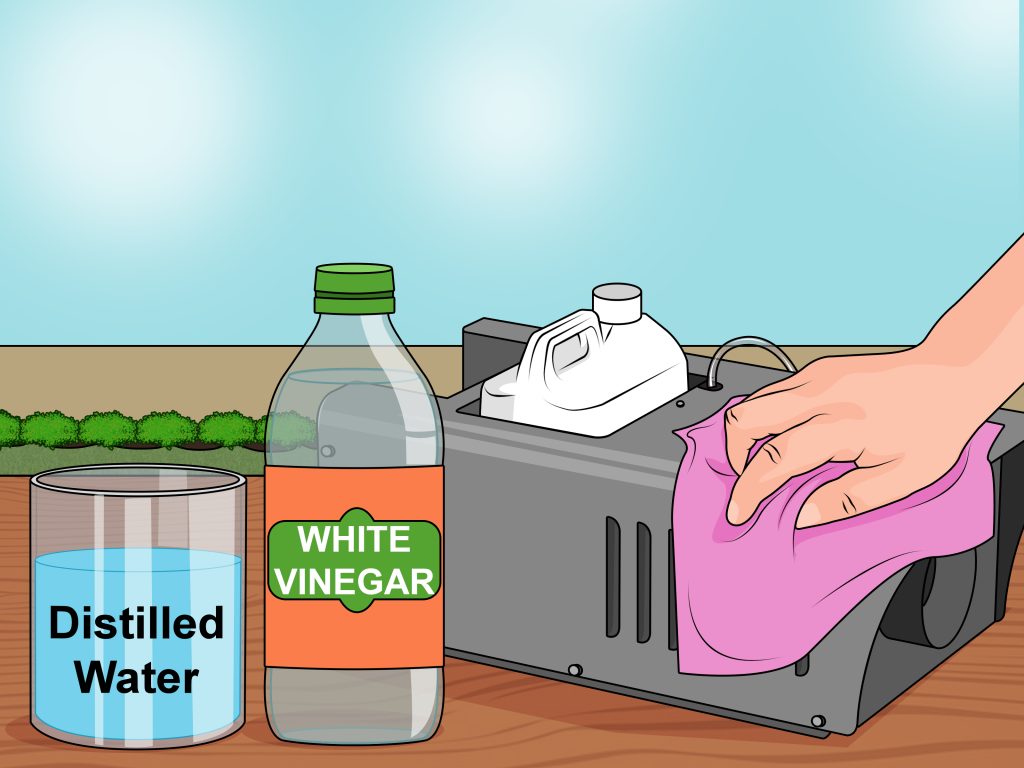
As a general rule, commercial fog machine cleaner is the safest option because it is designed for heater cores and pumps. A diluted white vinegar and distilled water solution is commonly used for light residue, but it should not be left inside the machine. After any cleaning solution, the system should be flushed with distilled water and then prepared properly for storage.
Tools and Supplies You’ll Need
- Distilled water
- Commercial fog machine cleaner, or white vinegar for a diluted DIY solution
- Clean measuring cup
- Small funnel
- Lint-free cloth or microfiber towel
- Pipe cleaner or soft nozzle-cleaning tool, if your manual allows nozzle cleaning
- Bucket, sink, or outdoor area for safe output
- Protective gloves, especially if handling old fluid or cleaner
- Your fog machine’s manual
How to Clean a Fog Machine: 13 Steps
Step 1: Turn the Fog Machine Off and Unplug It
Start with the boring but important part: safety. Turn the machine off, unplug it from the wall, and disconnect any remote, timer, or DMX cable. Fog machines get hot inside, and the heater block can stay warm after use. Cleaning while the unit is powered is a fantastic way to turn a simple maintenance job into a bad story.
Step 2: Let the Machine Cool Completely
Give the machine enough time to cool before touching the nozzle, opening panels, or moving hoses. The output nozzle can become extremely hot during operation. A cool machine is easier to handle, safer to inspect, and less likely to surprise you with a tiny metal handshake from the underworld.
Step 3: Move It to a Well-Ventilated Area
Cleaning a fog machine usually means running liquid through the system, so choose a garage with the door open, a patio, a driveway, or another well-ventilated spot. If you use a vinegar solution, expect a sharp smell. It is not dangerous in normal household amounts, but it can make your room smell like a haunted salad.
Step 4: Empty the Fog Fluid Tank
Pour remaining fog fluid out of the tank into a suitable container. Do not dump old fluid into the machine body, onto electronics, or across the floor. If the fluid is clean and fresh, some users save it in a labeled container, but if it looks cloudy, chunky, contaminated, or old, dispose of it according to local rules and the product label.
Step 5: Rinse the Tank with Distilled Water
Add a small amount of distilled water to the empty tank, swish it gently, and pour it out. Distilled water matters because tap water contains minerals that can leave deposits inside the heater and tubing. Those deposits are exactly the kind of trouble you are trying to prevent. Do not use dish soap inside the fluid path unless your manufacturer specifically says it is safe.
Step 6: Inspect the Nozzle and Fluid Line
Look at the nozzle for visible residue, crust, or dried fog fluid. If your manual allows it, gently clean the front nozzle opening with a pipe cleaner or soft tool. Never jam hard metal objects into the nozzle. If the fluid hose is removable, check that it is not kinked, cracked, or clogged. A fog machine with a blocked line may hum loudly, spit fluid, or produce weak fog.
Step 7: Choose Your Cleaning Solution
For routine cleaning, commercial fog machine cleaner is the best first choice. It is made to clean residue from the heater core and pump without guessing at chemistry. If you do not have cleaner and your manual does not forbid vinegar, you can use a mild DIY mixture. A common starting point is one part white vinegar to three parts distilled water for regular cleaning. For heavier residue, some users use a stronger 50/50 mix, but stronger is not always better. Vinegar is acidic, so it should be used carefully and flushed out completely.
Step 8: Add a Small Amount of Cleaner to the Tank
Use a funnel to add the cleaner to the tank. You do not need to fill the tank. One cup to a few cups is usually enough for a small or medium consumer fog machine. For large professional units, follow the manual’s amount. The goal is to move cleaner through the pump, tubing, heater, and nozzlenot to create a swimming pool for a tiny ghost.
Step 9: Heat the Machine as Usual
Plug the machine back in, turn it on, and wait for the ready light or indicator. Do not press the fog button before the unit has reached operating temperature. Most machines need to heat properly before liquid can vaporize and move through the heater block. Trying to force output too early can cause spitting or uneven flow.
Step 10: Run the Cleaner in Short Bursts
Once the machine is ready, run the cleaner through the system in short bursts of 10 to 30 seconds. Pause between bursts so the heater can recover. You may see light vapor, mist, or liquid discharge from the nozzle. Keep the nozzle pointed away from people, pets, fabrics, walls, and electronics. Continue until most of the cleaning solution has passed through, but do not let the pump run dry.
Step 11: Empty the Tank Again
Turn the machine off, unplug it, and let it cool briefly. Empty any remaining cleaner from the tank. This is especially important if you used vinegar. Cleaning solution should not sit inside the tank, pump, or lines for days. It did its job; now it needs to leave the building.
Step 12: Flush with Distilled Water
Add clean distilled water to the tank, heat the machine again, and run it in short bursts. This rinse clears leftover cleaner from the pump and heater. If you still smell vinegar strongly, repeat the distilled-water flush. When the output looks clearer and the smell fades, the machine is much closer to being ready for fresh fog fluid.
Step 13: Prime with Fog Fluid and Store Correctly
After rinsing, add a small amount of the correct fog fluid to the tank and run several good bursts of fog. This helps replace plain water in the lines with fog fluid and confirms the machine is working. Then turn the machine off, let it cool, wipe the exterior, and store it level in a dry, climate-controlled area. Do not store the machine with vinegar or cleaning solution in the lines.
How Often Should You Clean a Fog Machine?
Cleaning frequency depends on how often you use the machine. For occasional home use, cleaning before long-term storage is usually enough. For DJs, theaters, haunts, schools, rental shops, and event teams, cleaning every 30 to 90 days is a better habit. If your machine is used heavily, clean it more often. If it sits for months between events, test and clean it before show day, not 20 minutes before guests arrive.
Many problems begin when fog fluid sits too long, the machine is stored in a damp garage, or cheap fluid leaves residue behind. Treat fog fluid like a performance supply, not a mystery potion from last decade. Use quality fluid that matches your machine and keep containers sealed.
Signs Your Fog Machine Needs Cleaning
- Weak or inconsistent fog output
- Spitting liquid from the nozzle
- Burnt or sour smell during operation
- Loud pump noise with little output
- Longer heat-up times than usual
- Fog stops after a few seconds
- Visible crust or residue near the nozzle
If the machine is fully clogged, cleaning may not fix it. Once residue hardens inside the heater block, a basic flush can be too late. That is why preventive cleaning works better than emergency cleaning. A fog machine is much easier to maintain than resurrect.
What Not to Do When Cleaning a Fog Machine
Do Not Use Tap Water
Tap water can contain calcium, magnesium, and other minerals. When heated, those minerals can form scale inside the heater block. Always use distilled or deionized water for flushing.
Do Not Run the Machine Dry
A dry pump can overheat or wear out. Stop before the tank is completely empty. If you hear the pump suddenly change pitch, turn the unit off and check the fluid level.
Do Not Leave Vinegar Inside
Vinegar can help dissolve light residue, but it is not something you want sitting in the system. Always follow it with a distilled-water rinse and fresh fog fluid priming.
Do Not Mix Random Chemicals
Bleach, alcohol, ammonia, drain cleaner, fragrance oils, and mystery solvents do not belong in a fog machine. They can damage parts and create unsafe vapor. Fog machines are dramatic enough without chemical chaos.
Do Not Ignore the Manual
Some manufacturers require a specific cleaner or warn against certain methods. Following the manual protects performance and may also protect your warranty.
Troubleshooting After Cleaning
If your machine still has weak output after cleaning, check the basics first. Make sure there is enough fog fluid in the tank, the hose is fully submerged, and the machine is level. Air bubbles in the line can stop output temporarily. Turn the unit off, let it rest, and try again after the fluid line settles.
If the pump hums but nothing comes out, the line or heater may still be blocked. Try one more distilled-water flush or approved cleaner cycle. If the machine spits liquid, it may be using the wrong fluid, operating before full heat, or struggling with a partially blocked heater. If the circuit breaker trips, the power cord is damaged, or the unit smells like burning electronics, stop immediately and have it serviced or replaced.
Best Practices for Longer Fog Machine Life
Use the right fluid, keep the machine level, avoid dusty storage spaces, and wipe the exterior after use. Do not place the machine where it can suck in confetti, cobwebs, dirt, glitter, pet hair, or fake autumn leaves. Those decorations may look festive, but inside a fog machine they become tiny villains.
For seasonal users, test the machine at least a week before the event. That gives you time to clean it, buy fluid, replace a remote, or discover that your cousin borrowed it and stored it in a shed next to lawn fertilizer. For professionals, keep a maintenance log with dates, fluids used, cleaning products, and any output problems. A simple note can help you spot patterns before a machine fails during a show.
Experience Notes: What Cleaning a Fog Machine Teaches You Over Time
The first time you clean a fog machine, it may feel like you are doing something overly technical. You have a hot box, a pump, a mysterious tank, and a nozzle that looks ready to launch a tiny steam-powered rocket. After a few cleanings, though, you realize the process is mostly common sense: keep the fluid path clean, avoid minerals, do not overwork the pump, and never store the machine full of the wrong liquid.
One practical lesson is that fog machines usually warn you before they fail. A machine that used to fill a room in 20 seconds may start producing thinner fog. The pump may sound more strained. The nozzle may sputter. Many people ignore those signs because the machine technically still works. Then, on the night of the party, it gives one dramatic wheeze and retires from show business. Cleaning early is much less stressful than troubleshooting under pressure while someone asks, “Is the spooky fog supposed to smell like pickles?”
Another lesson is that fluid quality matters. Cheap or incompatible fog fluid may work for a while, but it can leave more residue, produce odd smells, or shorten the life of the heater. If you use your fog machine once a year, you may be tempted to buy the cheapest bottle possible. That is understandable, but the machine still has to heat and pump that liquid through narrow passages. Using the correct water-based fog fluid is like feeding the machine something it can digest.
Storage is also a bigger deal than most beginners expect. A fog machine left in a damp shed, attic, or garage can collect dust, moisture, and corrosion. The tank may get dirty, the hose may stiffen, and old fluid may thicken. A dry, level, climate-controlled storage spot gives the machine a much better chance of working next season. If you are storing it after cleaning, make sure no vinegar or cleaner remains inside. A final prime with fog fluid can help keep the system ready for the next use, depending on your manufacturer’s guidance.
Finally, cleaning teaches patience. Let the machine heat fully. Run short bursts. Let it rest. Flush it properly. Wipe it down. These steps do not require special talent, but they do reward care. A well-maintained fog machine produces smoother output, smells better, and behaves more predictably. That means your Halloween graveyard, dance floor, school stage, or photo shoot gets the atmosphere you wantedwithout the machine stealing the show for all the wrong reasons.
Conclusion
Cleaning a fog machine is one of those small maintenance jobs that pays off in a big way. With distilled water, the right cleaner, careful flushing, and smart storage, you can prevent clogs, improve fog output, reduce strange smells, and extend the life of your machine. The key is to clean before the machine is completely blocked. Once a heater core is badly clogged, even the best cleaning routine may not bring it back.
Follow the 13 steps above, use the correct fog fluid, avoid tap water, and never leave cleaning solution inside the machine. Your fog machine will reward you with thick, reliable clouds instead of sputters, drips, and dramatic disappointment.
Note: Always check your specific fog machine manual before cleaning. Manufacturer instructions should override general advice, especially for professional, low-lying, oil-based, or specialty atmospheric effects machines.
