
The Winners of Our Best Vacuum Storage Bags Tests
Th2
Vacuum storage bags are the closest thing home organization has to a cheat code. One minute your linen closet is
staging a comforter rebellion; the next minute everything’s flattened into tidy little “textile pancakes” that slide
under the bed like they pay rent.
But not all “space saver bags” are created equal. Some hold a seal for months. Some… dramatically re-inflate overnight
like a sad party balloon. To find the real winners, we built a standardized scorecard by synthesizing
hands-on testing methods and results reported across major U.S. home-and-lifestyle outlets, then ranked the top
performers by what actually matters: compression, seal reliability, durability, ease of use, and real-life sanity.
How We Scored Vacuum Storage Bags
A lot of product roundups tell you a bag is “great” without explaining why. Our scoring rubric is intentionally
unglamorousbecause your storage problems are unglamorous, too. Each bag line earned points in these categories:
- Compression power: How much volume reduction you realistically get with clothes and bulky bedding.
- Seal integrity: Whether bags stay flat after sitting (overnight and beyond), without slow leaks.
- Valve design: Does the valve fit standard vacuums? Does it clog? Does the cap seal reliably?
- Zipper track quality: Smooth closure, strong “lock,” and less chance of micro-gaps.
- Material toughness: Resistance to pinholes, seam stress, and “one sharp hoodie zipper = disaster.”
- Ease of use: Clear fill lines, included zipper clips, and pumps that don’t feel like cardio.
- Use-case fit: Closet hanging, under-bed storage, travel packing, or long-term bedding storage.
Quick Take: Our Test Winners
Here are the products that rose to the topeither because multiple independent test teams agreed they perform, or
because they consistently won in specific scenarios (travel, hanging storage, bedding, and budget bulk sets).
| Category Winner | Why It Won | Best For |
|---|---|---|
| Best Overall: Gongshi Vacuum Storage Bags | Great balance of durability, compression, and value; usually includes multiple sizes and a hand pump. | Most households, seasonal clothing + bedding rotation |
| Most Reliable “Classic” Seal: SpaceSaver Vacuum Storage Bags | Consistently praised for strong compression and dependable sealing when used correctly. | Closets, under-bed storage, small-space living |
| Best for Bedding: Vacwel Vacuum Storage Bags | Built for big, puffy items; great compression and organization-friendly details (like labeling). | Comforters, duvets, pillows, guest linens |
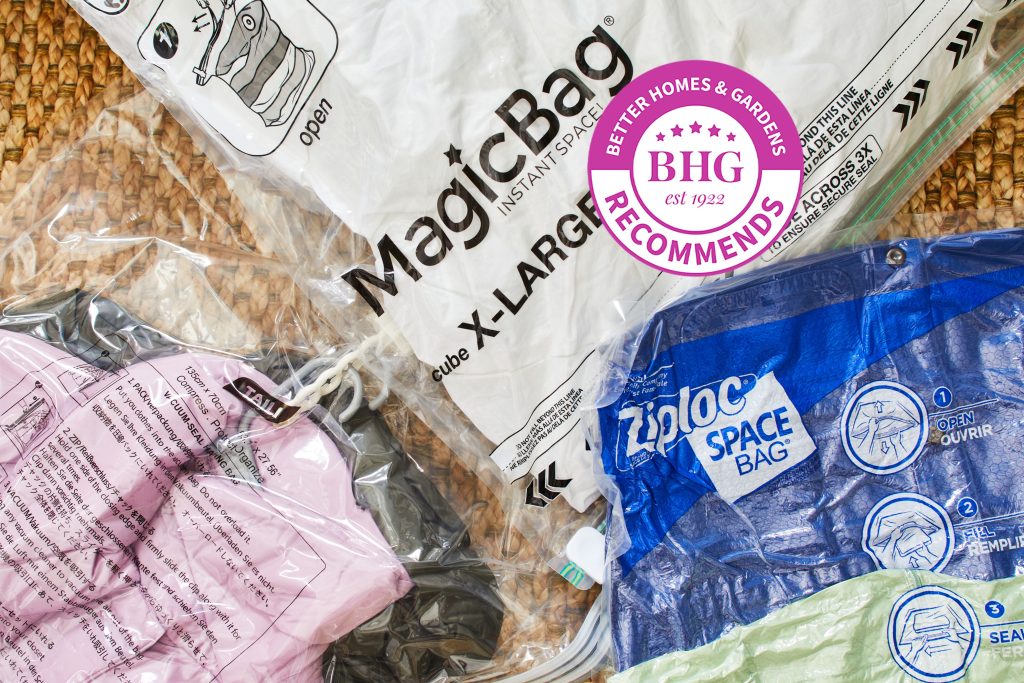
| Best Structured Option: MagicBag Vacuum Storage Cubes | Cube format stacks neatly and feels less “slippery pancake,” making storage more stable. | Closets and shelves that hate floppy bags |
| Best for Travel: Cozy Essential (plus a roll-up alternative) | Travel-focused performance and convenience; roll-up styles work when you have zero access to a vacuum. | Suitcases, road trips, cruises, hotel living |
| Best Hanging Bags: Taili Hanging Vacuum Storage Bags | Lets you store coats and long garments verticallyno folding stress, no “where did my collar go?” | Coats, dresses, suits, seasonal closet swaps |
| Best Budget Bulk Set: BoxLegend Space Saver Bags | Strong “value-per-bag” when you need a lot of bags fast for a move or a major purge. | Moving, dorms, big family linen overflow |
| Best System (Portable Pump Ecosystem): Flextail Vacuum Storage Bags + pump | Portable electric pump makes compression simpler and more consistent (especially away from home). | Frequent travelers and chronic over-packers |
Winner #1: Best Overall Gongshi Vacuum Storage Bags
If you only buy one set, this is the most “everybody wins” pick. Gongshi bags show up again and again as a top
performer because they nail the fundamentals: thick-enough plastic, a valve that plays nicely with typical vacuums,
and an assortment of sizes that covers everything from sweaters to comforters.
The sweet spot is the multi-size mix. In real homes, you’re not compressing one identical item
repeatedly like a lab robot. You’re doing a chaotic blend of hoodies, guest sheets, and that one blanket your dog
thinks is a throne. A variety pack makes it easier to avoid overstuffing (which is one of the fastest ways to create
tiny leaks).
When it shines
- Seasonal rotations: Summer clothes in winter, winter coats in summer.
- Overflow linens: Extra sheets and towels that only appear when guests appear.
- Storage-by-zone: One bag per person, one bag per season, one bag per “I swear I’ll wear it again.”
Pro tip
Don’t treat the zipper closure like a suggestion. Run the slider slowly, then run it again. If the brand includes a
clip, use it. If you can’t feel a consistent “zip-lock resistance,” you’re gambling with your closet space.
Winner #2: Most Reliable “Classic” Seal SpaceSaver Vacuum Storage Bags
SpaceSaver is the brand people bring up when they want a bag that feels sturdier than the bargain-bin options. It’s
also a frequent “best overall” style pick across major review outlets and small-space editorsespecially for
everyday closet use and under-bed storage.
The main advantage here is confidence. When your bags stay compressed, you stop thinking about them.
That’s the dream. Nobody wakes up hoping to “check on the status of the air valve.” (If you do, I respect your
hobbies, but I cannot relate.)
Best use cases
- Under-bed storage: A flatter profile is easier to slide and stack.
- Small apartments: The “I own four seasons of clothing in a two-season closet” lifestyle.
- Emergency decluttering: When company is coming and you need immediate floor space.
Winner #3: Best for Bedding Vacwel Vacuum Storage Bags
Bedding is the final boss of storage. Comforters don’t fold so much as they expand. They are basically
textile sourdough starters: leave them alone for two seconds and they grow.
Vacwel shines because it’s built for bulk and organization. Larger bags plus thoughtful add-ons (like labeling) make
it easier to store sets togetherso “guest bedding” remains a category instead of becoming a scavenger hunt.
How to get the best results with comforters
- Start bone-dry: Don’t bag anything damp, even slightlymusty odors love airtight situations.
- Fold loosely, then press flat: Tight folds can create hard creases; smooth it before vacuuming.
- Keep zippers and snaps inside folds: Hard hardware can poke and stress plastic over time.
- Stop vacuuming when it’s firm: Over-vacuuming can strain seams without meaningfully reducing size.
Winner #4: Best Structured Option MagicBag Vacuum Storage Cubes
Most vacuum bags turn into slick, floppy slabs. That’s fineuntil you try to stack them, and your closet becomes a
slow-motion avalanche.
Vacuum storage cubes solve that by giving compressed items a boxy shape. They’re easier to stack,
easier to label, and easier to slide onto shelves without the “bag slither” problem. If your storage space is more
shelves than under-bed, a structured form factor can feel like a genuine upgrade.
Who should choose cubes?
- People with shelves (linen closets, storage rooms, closet organizers).
- Anyone who wants stable stacking without bins.
- Households that rotate bedding and want each set to stay together.
Winner #5: Best for Travel Cozy Essential (Plus a Roll-Up Backup)
Travel vacuum bags have one job: help you pack more without sitting on your suitcase like you’re wrestling a bear.
Cozy Essential stands out because it’s designed around travel realitieslimited space, fast packing, frequent opening,
and the need to re-compress mid-trip.
That said, there’s a second travel category many people forget: no-vacuum travel. If you’re road
tripping, camping, or bouncing between places where you can’t rely on a vacuum, a roll-up compression bag
(often associated with the Ziploc-style approach) can be the better move. You won’t get the same ultra-flat finish as
a vacuum, but you also won’t be hunting for a vacuum cleaner at midnight like a raccoon in a hotel hallway.
Travel packing strategy that actually works
- Bag by function: One for tops, one for bottoms, one for cold-weather layers.
- Keep one “daily access” cube/bag: Don’t vacuum-seal the items you need every day.
- Use compression for bulky layers: Sweaters, hoodies, jacketsbig wins, minimal wrinkling regret.
Winner #6: Best Hanging Bags Taili Hanging Vacuum Storage Bags
Hanging vacuum storage bags are the closet equivalent of vertical real estate. Instead of folding coats into awkward
rectangles, you hang them like normal clothesthen vacuum out the air.
Taili’s hanging style bags are a strong pick because they support the way people actually use closets. You preserve
garment shape better than aggressive folding, and you can store long items (coats, dresses, suits) without turning
them into origami.
What to hang (and what not to)
- Great: puffer coats, winter jackets, long cardigans, sturdy dresses, uniforms.
- Be careful: embellished or delicate garments that don’t love pressure or friction.
- Avoid: items with sharp buckles, spiky hardware, or fragile fabrics you’d cry over.
Winner #7: Best Budget Bulk Set BoxLegend Space Saver Bags
Sometimes you don’t need a “perfect” bag. You need many bagsbecause you’re moving, you’re cleaning out a
family member’s closet, or you’ve finally accepted that you own enough blankets to supply a small ski lodge.
BoxLegend’s appeal is simple: you get a lot of capacity for the cost, and the basic features (zip seal, valve,
compatibility with standard vacuums) fit the common storage workflow. This is the set you buy when you want to solve
a volume problem quickly.
Winner #8: Best System Flextail Vacuum Storage Bags + Portable Pump
The “system” winners are for people who want consistency. A portable electric pump reduces the most common user
errors: under-vacuuming (bags stay puffy) and uneven vacuuming (weird lumps that waste space).
Flextail’s ecosystem matters most if you compress oftenfrequent trips, seasonal swaps, dorm living, or you just like
your storage to be neat enough that you could take a photo without rearranging everything first.
How to Choose the Best Vacuum Storage Bags for Your Life
1) Pick the right style: flat, hanging, roll-up, or cube
- Flat bags: Best for under-bed storage and stacking inside bins.
- Hanging bags: Best for coats and garments you don’t want to fold.
- Roll-up compression: Best for travel without a vacuum.
- Cubes: Best for shelf stability and tidy closets.
2) Prioritize valve + zipper quality (because leaks are the villain)
A vacuum bag doesn’t fail because your sweater is too powerful. It fails because air finds a tiny path back in:
around the valve cap, through a zipper gap, or via a pinhole. Look for sturdy valves, solid caps, and zipper tracks
that feel thick and consistent.
3) Don’t overstuffleave “seal room”
Overfilling is the #1 shortcut to disappointment. When you jam items right up to the zipper, you increase stress on
the seal and create wrinkles that can prevent a clean closure. Your future self wants you to leave a little margin.
Your future self also wants you to drink water, but let’s focus on the zipper first.
How to Use Vacuum Storage Bags Without Regret
- Wash and fully dry everything before sealing (odor + moisture are not your friends).
- Remove sharp items or fold them inward (zippers, buckles, buttons can cause weak points).
- Fill to the line (or at least don’t exceed the “you’re pushing it” zone).
- Seal the zipper twice and check for consistent closure across the entire track.
- Vacuum slowly until the bag is firm and flat, then stopmore isn’t always better.
- Re-cap the valve tightly and store bags where they won’t be punctured or overheated.
- Label like a grown-up (masking tape + marker works; you don’t need a label maker doctorate).
What Not to Store in Vacuum Bags
Vacuum storage bags are great, but they’re not universal. The big “don’ts” are about protecting items from
pressure damage or moisture problems.
- Delicate or embellished clothing: Beads, sequins, fragile trims, or anything that crushes easily.
- Natural materials that prefer airflow: If something needs to “breathe,” airtight compression may not be ideal.
- Anything not fully dry: Musty smells can set up shop in airtight storage surprisingly fast.
- Foam items with uncertain rebound: Some foams may not bounce back perfectly after long compressioncheck manufacturer guidance.
How to Make Vacuum Bags Work Long-Term
Want bags to stay compressed longer? Treat them like storage tools, not like disposable packaging. Store them away
from sharp edges, avoid high heat, and check them periodically. If you’re storing textiles long-term, it’s smart to
inspect and re-seal occasionally (especially after big temperature swings).
Conclusion: The “Right Bag” Is the One That Matches Your Storage Problem
If you want a dependable all-around set, Gongshi is the crowd-pleasing pick. If seal reliability is
your hill to die on, SpaceSaver is the classic choice. For bulky bedding, Vacwel and
structured options like MagicBag cubes make life easier. For travel, Cozy Essential
(and a roll-up backup) keeps luggage from turning into a wrestling match. And if you want a full-on system,
Flextail brings consistency with a portable pump.
Bottom line: vacuum storage bags can be a storage miracleif you pick the right style, seal them correctly, and avoid
the most common pitfalls (overstuffing, moisture, and hardware poking holes). Your closet deserves peace. And you
deserve to find your sheets without a quest marker.
Real-Life Experiences: of “We Learned This the Hard Way”
The first time you use vacuum storage bags, it feels like discovering a secret level in a video game. You watch a
puffy comforter collapse into a flat rectangle and think, “So this is what power feels like.” Then you get ambitious.
You start vacuuming everything. Sweaters. Extra towels. That fuzzy throw blanket that somehow multiplies every winter.
And for a moment, your home looks like it belongs to someone who has their life together.
Then real life shows up. We learned quickly that vacuum bags don’t just reward enthusiasmthey reward precision.
One time, we stuffed a bag so full of hoodies that the zipper track looked like it was squinting. It sealed… kind of.
The next morning, the bag had reinflated just enough to wedge itself under the bed like a stubborn drawer. Lesson:
leaving a little “seal room” is not wasted space; it’s insurance.
Another memorable moment: the “tiny zipper, big consequences” episode. A winter coat with a chunky metal zipper was
folded badly, and the zipper edge pressed against the plastic like it had a personal grudge. Weeks later, we spotted
a slow leakno dramatic pop, just gradual puffiness. Now we fold hardware inward or wrap it in a soft layer (like a
sleeve) before compressing. If a garment has anything sharp, it needs a strategy.
Travel experiences are their own comedy. Vacuum bags can help you pack more, but they also tempt you to bring more.
There’s a very real psychological effect where you think, “I can fit three extra sweaters!” even if you’re going to
Florida. The best travel win isn’t cramming your suitcase to capacityit’s staying organized. We liked using one bag
for cold layers and leaving daily outfits uncompressed so we weren’t opening and resealing the same bag ten times a
day.
We also discovered that vacuum storage is not the same as “set it and forget it.” In humid climates, it’s especially
important that everything is fully dry before sealing. Once, a “barely damp” towel (it felt dry, but it lied) went
into a bag with spare linens. When it came out later, the smell had opinions. Now we treat “completely dry” as a
non-negotiable standard and store bags in cool, stable conditions rather than heat-prone spots.
Finally, the best surprise: vacuum bags can make seasonal swaps almost effortless. When bags are labeled clearly,
you can rotate your closet in minutes instead of hours. The payoff isn’t just extra spaceit’s reduced decision
fatigue. You stop digging through off-season clutter and start using your home the way you intended. And that,
honestly, feels like winning.
